TABLE OF CONTENTS
“Answer-First” Content | Schema & Structured Data | Niche Authority | Multi-Touch Citations | Agentic Search | Video & Multimodal AEO | E-E-A-T
In 2026, the world of search has evolved, with SEO no longer being just about keywords or page rankings. Financial firms now face a new reality: ChatGPT, Perplexity, Google AI, and other AI-powered tools decide whether your firm becomes a cited, trusted source, rather than just indexing your site.
Answer Engine Optimization, or AEO, is the next step in this evolution. Think of it as building a second floor on top of your existing SEO foundation. It’s not a completely new practice, but it requires refining how you present expertise and structure information, while building credibility across the web.
For firms in finance, the stakes are high: AI treats financial guidance as “YMYL,” or Your Money, Your Life content, meaning accuracy, trust, and authority are paramount. The goal is simple but ambitious: moving from being ranked #1 to being the authoritative answer AI actually cites.
1. The “Answer-First” Content Structure
The first key shift in AEO is presenting information in a way that AI and humans can immediately understand. Rather than burying insights deep in a page, the best-performing financial content puts a concise, clear answer right at the top:
- Place a 40-60-word direct answer under your H1 or H2.
- Use short, declarative sentences that define your point clearly.
- Include the most relevant keywords naturally without overstuffing.
- Read your top-line answer aloud to ensure it stands on its own.
AI “scrapers” look for these brief definitions to pull into snippets. And prospective clients often skim content before committing, so giving a digestible answer first sets up trust and encourages deeper engagement with the supporting details below.

2. Speak “Robot” with Advanced Schema
AI or Large Language Models (LLMs) rely on structured signals to interpret your content. Using schema markup, like an FAQ page or a how-to guide, helps communicate context clearly. It tells AI exactly what your content is about without forcing the model to infer meaning.
For example, FAQs allow AI to surface your insights directly in answers to client questions. How-to guides can appear in step-by-step panels, while videos with proper schema can be referenced in multimodal summaries or voice-activated searches.
The key is thinking about your content from the AI’s perspective. Every headline, section, paragraph, and data point should provide a clear signal of your firm’s expertise and the problems you solve. AI models favor content that’s unambiguous and well-organized. The more ways AI can “read” your content, the more likely it is to cite you.
Integrating structured callouts within articles, such as “Key Takeaways” or “Steps to Consider,” sections provides clear, self-contained answers that are AI-friendly and highly shareable.
3. Niche Authority & The “Who-What-Where”
AI prioritizes specialists over generalists. Rather than calling yourself a “Financial Advisor,” clarify the exact audience you serve and the solutions you provide.
For example, “Tax-Optimized Retirement Specialist for Boeing Employees in Seattle” immediately communicates three essential factors AI uses to assess relevance: who, what, and where.
This level of specificity strengthens your Knowledge Graph presence, making your firm more likely to appear as the authoritative source in AI-generated answers.
Publishing content that targets this niche reinforces your expertise. Blog posts, client case studies, educational resources, and other content tailored to this audience help your human clients and signal to AI that your firm is deeply knowledgeable and trustworthy in this specific area.
4. Leveraging Multi-Touch Citations
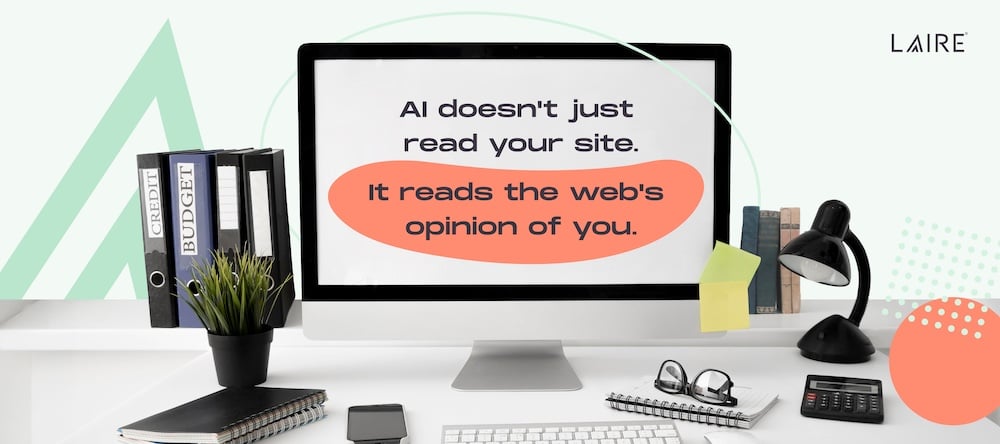
AI does more than just look at your website; it evaluates consensus across sources. Mentions in industry publications, online communities, respected forums, and similar sources all contribute to your credibility. A few tips for making the most of this:
- Secure citations in trade publications, industry journals, and reputable news sites.
- Participate in discussions on platforms like Reddit and Quora.
- Ensure internal links reinforce key content themes.
- Focus on genuine human-led thought leadership rather than superficial AI-generated content.
Each external mention acts like a vote of confidence. Credible references pointing back to your expertise mean AI is more likely to trust your content. Engaging with respected voices in your field amplifies your reach and solidifies your position as a reliable authority.
Consider combining expert commentary with published research or market analysis. When your insights are corroborated by multiple reputable sources, AI interprets your content as highly reliable. Over time, this strengthens the likelihood your firm will be the cited authority for niche queries.
5. Optimizing for “Agentic” Search
The rise of “agentic” AI — tools like Gemini or Claude that act on behalf of users — means firms are evaluated differently. These assistants compare service offerings, fees, features, and capabilities to make recommendations.
To stay competitive, make your content easy to interpret for these agents. Present your services, pricing, guides, and other key info in clear, structured sentences that are easy for AI to parse. Avoid overly complicated formatting or long-winded explanations that might confuse algorithms.
Regular updates are a must: outdated fee schedules or services can cause AI assistants to bypass your firm entirely. If your competitor’s content is cleaner and better structured, the AI will surface them first.
Think of this as creating an AI-friendly client brochure. Every detail should be clear, accessible, up-to-date, and aligned with user intent. A firm that anticipates agentic evaluation positions itself as the natural choice when AI recommends financial solutions.
6. Video & Multimodal AEO
AI now “watches” and “listens” as much as it reads. Video content, combined with transcripts and proper schema, dramatically increases the likelihood of being cited in AI summaries.
Even short clips that answer frequently asked questions or explain key financial concepts can expand visibility. VideoObject schema tells the AI what the content is about, while YouTube transcripts allow spoken information to be parsed accurately.
Engagement data reinforces authority: high watch times and clear narration, along with consistent posting, all indicate relevance. AI interprets these metrics as indicators of quality and trustworthiness. Combining text and video with schema provides multiple pathways for your content to appear in AI-driven answers.
Consider hosting webinars or explainer videos addressing common financial challenges. A video series targeting specific audiences, like retirees or small business owners, can become a go-to reference for AI models, boosting your chance of being cited repeatedly.

7. The “E-E-A-T” and “YMLY” Audit for 2026
Expertise, Experience, Authority, and Trustworthiness (E-E-A-T) remain the cornerstone of visibility for YMYL content. AI evaluates what you say and who says it, along with whether the information is corroborated. A few best practices for this:
- Link author bios to LinkedIn and professional credentials like CFP or CFA.
- Align content with widely recognized financial guidelines.
- Support every claim with credible external sources.
- Give older content an update to stay accurate and relevant.
Consensus is now as important as backlinks, with AI favoring content that multiple credible sources confirm. Providing context about the author’s experience, such as years of specialization or client outcomes, further enhances authority. Transparent authorship and regular updates build the trust required for AI to cite your firm.
In practice, this means every blog post, white paper, report, or video should highlight a few key pieces of info: who created it, their credentials, and any sources used. Even minor details, like citing reputable statistics or industry studies, can make your content more trustworthy in AI’s eyes.
The Future Is Conversational
Visibility in 2026 isn’t measured solely on page rank. Clarity, trust, structure — these all define it. Firms that integrate answer-first content, advanced schema, niche specialization, broad citations, agentic-ready information, multimodal media, and rigorous E-E-A-T audits will dominate the new landscape.
The reward is significant: your firm becomes the featured answer or the authority AI recommends when clients ask, rather than just appearing in searches.
Is your firm invisible to AI? Get an AEO Readiness Assessment from LAIRE to see where you’re being cited — and where you’re missing out.