TABLE OF CONTENTS
The New B2B Buyer’s Journey | AI & Sales-Marketing Alignment | AI & Content Creation | The Hidden Risks | AI & Your B2B Growth Strategy | FAQs
Generative AI used to be a buzzword. Now, it’s a business imperative.
If you’re not using it, you might already feel behind. Tools like ChatGPT, Claude, and Gemini are no longer just “cool” innovations. They’re woven into everyday operations across industries, especially for B2B business development.
Generative AI in sales and marketing is rewriting playbooks — including how we blog. For B2B companies aiming to grow, evolve, and compete, it’s not optional — it’s essential.
At LAIRE, we’ve always been growth-minded strategists focused on helping B2B businesses stay ahead of the curve. We’re not just embracing AI, we’re optimizing it. Let’s explore what that means for your B2B growth strategy in this new era.
Generative AI Is Rewriting the B2B Buyer’s Journey
Today’s B2B buyers are savvier and more self-reliant. They no longer wait for sales teams to initiate conversations. Now, they research independently, often with the help of artificial intelligence.
From AI-powered search engines to chatbots that anticipate questions, buyers are interacting with content before ever speaking to a human. Tools like ChatGPT have become go-to consultants in the early stages of the B2B buyer’s journey.
This shift has led to a more fluid, non-linear model called the 4S Buyer Journey:
- Streaming: Buyers expect interactive, personalized digital experiences.
- Scrolling: Think of it as modern-day window shopping with no immediate intent.
- Searching: Tools like Gemini, Google Lens, and AI Overviews now complement traditional search engines.
- Shopping: Buyers want fast, seamless paths to purchase, on their terms.
So, what does this mean for B2B companies?
It means that selling has taken a backseat to guiding. With the help of generative AI, your digital presence can become a resource. You'll anticipate buyer needs and offer the right content at the right time.
The companies that succeed will be the ones that humanize AI to create real, relevant, and value-driven experiences.
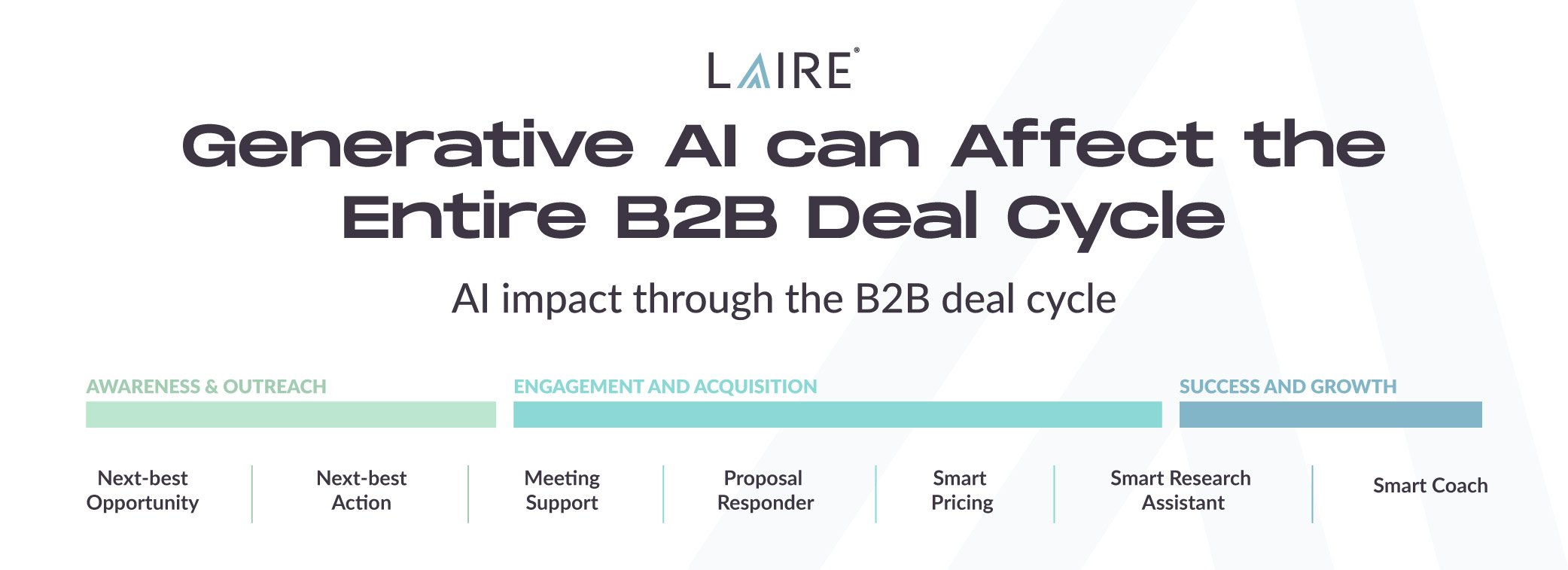
Source: McKinsey & Company
Example: Gen AI and the Financial Services Buyer’s Journey
Wealth management firms can use generative AI to produce high-value content, such as retirement planning guides or market outlook reports, precisely when prospects are in research mode.
By the time a potential client makes contact, they’ve already engaged with material that establishes the firm’s expertise and point of view.
Example: Gen AI and the Home Construction Buyer’s Journey
Custom home builders are among the clearest beneficiaries of AI-powered content and chat tools, and for good reason: their buying cycle is one of the longest in any industry.
AI can now handle the early and middle stages of that journey, answering detailed questions about build timelines, design customization, and financing options before a sales rep ever enters the picture. The result is a shorter consideration phase and a warmer handoff when the human conversation finally begins.
Sales and Marketing Are Merging Thanks to AI
AI is blurring the line between sales and marketing at lightning speed. Real-time lead scoring, email generation, proposal writing, and buyer intent tracking are just the start.
Sales teams are evolving from closers to strategic orchestrators. They leverage AI to identify, nurture, and convert high-intent leads with precision. Meanwhile, marketing provides personalized content to support those efforts, creating a seamless experience.
Your sales funnel is becoming an AI-powered flywheel. If marketing and sales aren’t syncing their data, your AI tools are only half effective. Generative AI in sales and marketing depends on unified systems, shared data, and tight collaboration.
Example: AI-Powered SaaS Sales and Marketing Alignment
B2B software companies can use AI to flag when a trial user’s feature engagement drops, automatically triggering a personalized outreach sequence from the sales team before churn becomes likely. Marketing and sales working off the same behavioral data makes this possible.
Example: AI-Powered Manufacturing Sales and Marketing Alignment
Industrial manufacturers can use AI to score inbound leads based on company size, equipment type, and purchase history, so sales reps spend their time on high-margin opportunities rather than unqualified inquiries.
Content Creation and Strategy Are Being Reengineered
Yes, generative AI can write faster than you can blink. But the goal isn’t to replace human creativity — it’s to amplify it.
Let AI handle the first draft. Then let your team dig into what really matters:
- Does this content align with our strategy?
- Is it adding value or just filling space?
- Are we maintaining our voice?
One of the biggest things is just word choice. Sometimes I just need to get it out on paper, and it helps clean up redundancy and make it sound better. It’s smart enough to rewrite in a way that feels polished without losing what I meant.
– LAIRE Client
This is the era of human-curated, AI-accelerated content. And ironically, the rise of automation is making authenticity more important than ever. To stand out, B2B brands must humanize AI by infusing it with real insights, point of view, and tone. That’s how you earn trust and attention.
The Hidden Risks: Data Integrity, Brand Voice, and Over-Automation
Generative AI is powerful. But power without oversight can do more harm than good. From hallucinated outputs to inconsistent messaging, the risks are real. Left unchecked, AI could dilute your brand voice or push automations to the point of over-saturation.
When overused or mismanaged, AI-generated content sticks out (in a bad way). It can sound impersonal and robotic. Generic.
That’s why AI is not plug-and-play. B2B companies must put ethical guardrails and quality assurance in place. You need creative direction, human oversight, and strategic frameworks.
Humanizing AI is the safeguard here. It’s how you keep automation in service of your brand, not the other way around.
A few risks worth monitoring in 2026:
- Data privacy and compliance: With the EU AI Act now in effect and evolving data regulations across industries, financial services and manufacturing firms in particular need documented AI governance practices.
- Over-automation: Buyers, especially in high-trust B2B categories, will disengage when every touchpoint feels like a bot. Know where the human handoff needs to happen.
- Brand dilution: If your team is prompting in the same AI tools without a defined brand voice, your content will look and sound like everyone else’s. Your brand guidelines are what keep AI output distinctly yours.
What This Means for Your 2026 B2B Growth Strategy
So what does all this mean for your B2B roadmap?
To thrive, your growth strategy must be AI-informed, human-first, and built on a foundation of integration, alignment, and experimentation. Here’s how to start:
- Humanized AI content engine: Use AI to produce personalized content fast, but keep human insight at the center.
- Sales and marketing alignment: Ensure seamless communication to fully leverage AI insights.
- Data enrichment strategies: Feed your AI accurate, relevant data for better targeting.
- Experimentation mindset: Constantly test, tweak, and learn. AI evolves daily; so should your strategy.
- AEO readiness: In 2026, generative AI tools like ChatGPT, Claude, and Gemini are becoming the first stop in the buyer’s journey. Structure your content so it’s easy for these models to find, quote, and surface. That means clear headers, direct answers, and schema markup.
If your team hasn’t adopted generative AI yet, the gap is only going to widen. If you’ve adopted it without a B2B marketing strategy, the risks are just as real. The sweet spot is intentional, human-guided AI that serves your buyers and your business.
Frequently Asked Questions About Generative AI for B2B Marketing
What is generative AI?
Generative AI is a type of artificial intelligence that can create original content, including text, images, code, and audio, based on patterns learned from large datasets.
In B2B marketing, generative AI tools like ChatGPT, Claude, and Gemini are used to draft content, personalize outreach, score leads, and automate workflows.
What are the most common generative AI use cases in B2B marketing?
The most common generative AI applications in B2B marketing include:
- Content creation and editing
- Email personalization
- Lead scoring
- Chatbot engagement
- Sales enablement materials
- SEO research
- Social media copy
In 2026, agentic workflows that handle multi-step tasks end-to-end are becoming increasingly common.
What are the benefits of generative AI for B2B companies?
The key benefits of generative AI for B2B companies include faster content production, more personalized buyer experiences, improved sales and marketing alignment, better lead qualification, and the ability to scale campaigns without scaling headcount.
The biggest gains come when AI is paired with strong human oversight and a clear brand strategy.
What are the risks of using generative AI in marketing?
The main risks include brand voice dilution, AI-generated inaccuracies or hallucinations, over-automation that makes buyer interactions feel impersonal, and data privacy concerns.
Companies in regulated industries like financial services need to be especially careful about compliance and governance when deploying generative AI tools.
How is generative AI changing the B2B buyer’s journey?
Generative AI is making B2B buyers more self-reliant. They now use tools like ChatGPT and Gemini to research vendors, compare options, and shortlist providers before ever speaking with a sales rep.
This means your content needs to be present, credible, and well-structured enough to show up in AI-generated answers, not just search engine results.
What is the difference between generative AI and traditional marketing automation?
Traditional marketing automation follows rigid, pre-defined rules, like sending a follow-up email three days after a form submission. Generative AI goes further by creating original content, adapting messaging based on context, and making probabilistic decisions in real time.
The two work best together: automation handles the sequencing, and generative AI handles the personalization.
How do I get started with generative AI for B2B marketing?
Start by identifying one high-friction area in your marketing or sales process, like first-draft content creation or lead follow-up, and test a generative AI tool there.
Define your brand voice and guidelines before you scale. Then build from wins, expanding AI use as your team becomes more fluent with the tools and governance practices.
Harness Generative AI for B2B Growth
Generative AI is not a shortcut. It’s a strategic operating system, one that rewards the companies that invest in the strategy behind it, not just the tools themselves.
At LAIRE, we help B2B companies build AI-informed growth strategies that are human-first, data-driven, and built to last. Ready to put AI to work for your business? Let’s talk.