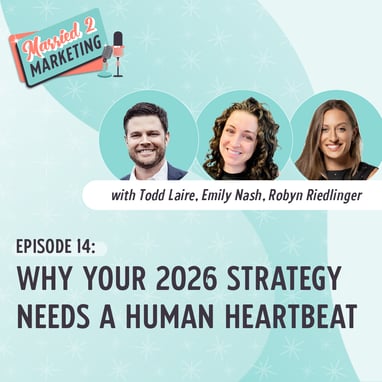
In this episode, Marketing Strategist Emily Nash and Co-Founder and CEO Todd Laire are joined by founder and creator of Your Signature Talk®, Robyn Riedlinger, to deep dive into strategies for 2026 and why an increase in content means less real connections.
They explore how to find the “soul” in your insights, the effects of GenAI, and how to become a better storyteller.
Tune in for real talk on how to find the “heartbeat” in your 2026 strategy and tips to get your listeners to trust and lean into your content.
Todd Laire (00:39)
Hey everyone, welcome to this episode of Married to Marketing, why your 2026 strategy needs a human heartbeat. We're joined today by special guest Robin Riedlinger, founder of Your Signature Talk. Robin is a global speaker and entrepreneur known for helping leaders transform their expertise into influence through aligned value-driven communication. Her mission is to help people find, refine,
and amplify their voice so they can lead with purpose, authority, and integrity. With a background in industrial and organizational psychology, business leadership, as well as public speaking, Robin teaches the deeper principles of self mastery and message mastery that elevate a leader's confidence and communication. She blends the psychology of change and behavior, the art of storytelling, and the strategy of revenue-driven speaking.
to help live audiences understand not only what to say, but who they must become to speak with conviction and influence. Robin is the founder and creator of Your Signature Talk, a high ticket brand framework that empowers speakers to craft high converting talks rooted in clarity, confidence, and integrity. She also is the founder of Speaker Connect, a membership platform designed to help speakers land global stages without relying on an expensive PR agency.
Emily Nash (01:50)
Yes.
Todd Laire (02:01)
Her annual stage, Power of Voice, now branded POV Global, has been held in Charlotte, Las Vegas, and Miami, giving speakers the opportunity to deliver their signature talks to live audiences. Her insights have been featured on WBTV, Deluxe Version Magazine, CEO Weekly, Authority Presswire, The Andy Audate Show, The Love Means Business Podcast, and as well as Inc.
positioning her as a thought leader in communication, leadership behavior, and entrepreneurial speaking strategy. Robin, welcome to the Married with Marketing podcast.
Robyn Riedllinger (02:36)
Thank you so much, Todd and Emily. I'm really excited to be here.
Todd Laire (02:39)
Awesome. Well, we'll jump right in. Really, this year, it's like welcome to the first year of the future, but I feel like the last few years has been that where we've just been seeing trends and new ways of doing business and through AI just emerge. So I think we're all dealing with, as consumers, but also as business owners and this complex world of selling is overcoming this trust gap.
that is getting wider by the day, really. And so much so in 2026 so far, we have the power to create more content than ever using AI. I think as marketers, we're sick of AI-generated content when it has no human input or touch to it. But doing so as output has increased, real connections have suffered.
all live in the zoom age where we connect virtually and try to do that as best we can and then do come together in person. But it's just been harder to make real connections, especially in the, in the field of sales. you know, and so many brands now are pushing out the same commodity content as everyone else. ⁓ you know, one copies the other and it just gets worse. why should the human on the other end actually care? And I think that's what we're all kind of grappling with. What is.
What is the soul and your insights that make a listener stop, lean in and actually trust you? And so excited to dive into that conversation, Robin, because it seems like that's, you know, what you do and what you're finding and obviously learning, you know, along with the rest of us. but I saw an interesting stat, I think that can, can help open this up. You know, 93 % of consumers today reportedly prefer human interaction over AI for high stakes decisions. That, that makes sense.
Authenticity is no longer really a differentiator. It's not really a mission statement anymore. It's a requirement, at the very least, prerequisites. So we're eager to dive into your expertise to help us all become more impactful storytellers and ideally sell more and grow our businesses.
Robyn Riedllinger (04:41)
Yeah, I think this is an excellent topic and definitely one that needs more attention, more perspective, and just I think a more open mind in general, the ability to think a little bigger picture. So feel free to ask away if there was one question to kick off this section.
Todd Laire (04:55)
Yeah, definitely.
Emily Nash (04:56)
I'll,
Todd Laire (04:56)
I forgot to I forgot to introduce Emily Nash, who's also our esteemed marketing strategist at layer and my co host at the Marriott of Marketing podcast. So welcome as well, Emily, happy to have you here too.
Emily Nash (04:57)
I'll for a minute.
Hey, thanks. And eager
to hear your perspective, as I was saying before we hopped on and recorded, how we tell the story, how we connect. All these things are becoming the edge that everyone needs to identify. And it's becoming harder when there's just nose blind to AI generated content, which tends to be a topic de jour. So let's you off with a question so you can give us some of your insights.
Robyn Riedllinger (05:30)
Yeah.
Emily Nash (05:30)
Robin,
with your background in industrial psychology, why do you think we are seeing such a strong human-only preference in 2026? What is happening in the human brain when we encounter perfect AI content versus a voice that has a real heartbeat?
Robyn Riedllinger (05:42)
So when you say human only, the fact that there's a desire for human only means we've already been a trajectory of removing the human from the ecosystem, right? And so the removal of the human from the ecosystem was in fact an overcorrection as with anything. That's why it's swinging so hard back the other way. But then we had the pandemic thrown in there which made it even harder to go without human connection. It gave us...
the perfect training ground to establish ourselves online. And so this desire for human only is just simply because I think we've over-corrected and we've lost sight of the purpose for why we brought in these automation AI tools to begin with. So my perspective is that...
First, it was all humans in the workplace. We're gonna just go back for a second. It's all humans in the workplace building whatever parts of the business that they're responsible for. Then they were like, you know what? We need our time back. We're tired. We're exhausted. We're realizing and coming into awareness that time is our greatest resource, not money, not material things, but time. It's the one thing we cannot get back. And so they took an initiative to start giving humans, in my opinion, their time back. But then the door swung the other way because...
In getting our time back, we lost sight of our basic human needs. So sure, we can be more productive in different environments with and without humans, but at the end of the day, we are part of a breed here on Earth known as human beings. And so without that connection, I just think we really lose ourselves. Does that?
Emily Nash (07:10)
I think you're articulating something simple, but so easy to oversee. it's like a needed starting point to just set the note that yes, we overcorrected, good point. COVID, it brought us all into pods or separated from close family and friends for a long period of time. So we really felt what it meant to connect with someone we could connect. So I think you articulated something we just needed to start from.
The feeling that we all have that we're over-taxed sometimes with needing to produce and create messaging and grow and our goals. And so we're asking for our time back, but then at the end of the day, if we're not, we're gonna hear from you, if we're not infusing a heartbeat to what we're saying, then who's gonna make anyone care at end of the day?
Robyn Riedllinger (07:52)
And the heartbeat is usually the person that holds the vision. When that person is no longer involved in the ecosystem or the process, and I'm not talking about exits or anything like that. I'm specifically referring to when this person is responsible for running the company, they still own the company and they bring in, maybe it's AI, maybe other people on their team. If they get too far from the customer or from...
Awareness of what's going on like you don't even feel their energy and their vision isn't holding frame inside of the company anymore I think that's where people can get lost Anytime I have gone on a trip or gone somewhere and I've stayed away for too long from my ecosystem from the thing that I basically give like life-force energy to If I go too far away, it struggles without me. It can't sustain too much. And so I think
Todd Laire (08:23)
Hmm.
Robyn Riedllinger (08:40)
instead of choosing to replace yourself all the way, maybe just return to the purpose of why you started to begin with, because that's where the soul comes from. It's always, it ties back into our why, our purpose. And if we lose sight just to fully automate something, you're not gonna have any texture, no feel to it, no vibe, no actual brand, in my opinion.
Emily Nash (09:02)
It's a good point. think it makes me think of an editor at a newspaper. I'm not going to pick up that paper. There's no point of view if there's not someone overseeing the general stories that are coming out. And so there's always going to be like, and that's not in media, but it's going come back to a point of view, a story, and someone having their energy poured into it so that it can come out as one cohesive thought process.
Robyn Riedllinger (09:27)
Yeah, so I just think there's been a power play with AI and automation between that and humans. It's a power play. Who's actually more powerful, the bots or the people? But the people program the bots, right, through coding, through mirroring, through commands and through conditioning. And so the bots are just operating under the control of the human. I don't know. I just think we've delegated too much of our power and too much of the control away to something that we still actually have control over.
Emily Nash (09:56)
Yes, so let's bring it back and how we can do that. Let's go to our next question.
Todd Laire (09:58)
Yeah.
And Robin, love that. I think you said it. And I love this, that influential speaking isn't just about what we say, but who we must become to say that. I think that speaks to like the root of, you know, finding your voice, having posture, you know, when you're speaking, having command of the room, you know, when you're trying to influence people and whatnot.
In a world where live, not only can we generate a script fast, but AI can do it, and we of just sit in the back seat. How does a leader actually become the kind of person whose voice carries more weight than, an algorithm? What should they focus on? What does influential speaking mean to you?
Robyn Riedllinger (10:41)
matching your actions with your words. I do believe true leadership is rooted in integrity. And if I say one thing, but I'm doing another, or I never get around to doing the thing I said I was going to do, I will breach trust and impact the relationship negatively because now you're just giving what I like to call lip service. And lip service can only take you so
Right? When you say you're going to do something, for example, let's say you open the year with a team meeting and you tell your team that for this year we're going to set out to accomplish X, and Z goals. These are the tools we have to work with. This is who's responsible for what. You lay it out almost like a project plan for the year. But then all of a sudden you completely disappear from the scene. Nothing ever gets done. You're no longer a part of the project. just, it breaks, everything breaks glue or I'm sorry, communication is the glue that holds things together.
So you have to make sure that you're not just saying what needs to be said, but you're actually acting upon it as well. And then that is leadership. That's why a lot of people say, it's not even about what you say. It's every action that I take that's leading us to a better place, that's leading us to the next step. You know, it's the ability to sit back and observe how someone moves in their personal and professional life to see how they're connecting to the next step, to the next goal, to the next part of the mission.
Watching those actions like that's leadership not just telling somebody what to do Yeah
Todd Laire (12:03)
That's great.
Emily Nash (12:03)
I think of it as like someone stepping on a stage, which naturally you're involved with a lot, and they're responsible for a brand. How are they telling that story? And then what for them do they need to step into to become that story? if it is the integrity you're talking about, I think that rings true still. But if there's anything a little more nuanced for the brand and the sales side of things.
Robyn Riedllinger (12:26)
You have to own your story. Fully, entirely, completely own your story. And then you have the opportunity to say it better. You have the opportunity to rewrite the story from a place of wisdom, from a place of experience, from a place of, just went through all of this in my life and I'm gonna show you how either you don't have to go through this, you can get through it faster, different, better, less painfully.
It's always about sharing the wisdom. So a lot of people are stuck in their story, whether it's their personal transformation story, their brand story, some other type of internal, external belief story that they're telling themselves, they're stuck. They don't know how to get to the other side, and that's why they cannot take action.
Because in order to take action, if I choose change, if I make a decision right now that I'm going to start speaking on stage, if I make a decision that as a business owner, as an entrepreneur, I'm going to take full responsibility for my company's visibility, if I say I'm gonna do that and I have to fully own that decision, that means I'm not quite the person I have to be to get there yet, right? All I've done is put a stake in the ground in front of me and saying, I'm gonna achieve that goal.
And then what's going to happen is you're going to get confronted with every single reason why you haven't done it yet. So that's what happened to me as part of my story. When I decided that public speaking was going to be the path for me, I had a vision of myself speaking on stage. And I said, you know what? Let's go for it. As soon as I chose that, my whole world turned upside down because I wasn't yet the person I needed to be in order to be the version that could do that. That could step into leadership. That could share a powerful message.
It's total personal and character development. So much has to change. Any belief you have around the fear of public speaking, which is not actually the fear, the fear is always deeper than that. You have to confront all of that through action and preparation and a commitment to the goal. So you become the person through a ton of mistakes. I just gave a talk recently about how powerful failure was on our way to success, that without it, we couldn't possibly be successful.
So we have to be willing to put in the reps and to mess up as many times as it takes until we succeed. Just never quit.
Todd Laire (14:36)
I love that.
Emily Nash (14:36)
I think connecting the dots
is coming from wisdom. So in becoming the person, you come up with those challenges. You're not quite there. But then when you do get there, all that wisdom along the way is that heartbeat and soul you're adding into the vision and story you're telling. And for our brands, who are saying, the reason why these brands or businesses exist is that can make it faster, smarter, better, grow for you. And then if they're coming from a place of wisdom, the story resonates even further. And I think those are the dots in connecting that.
are really resonating, I think, for our audience.
Robyn Riedllinger (15:06)
That's the truth. That's why. Because now you're bringing forward truth from experience. It's proven wisdom. It's like, I somehow made it here. Do you want to know how I got here today? Right? And it's just being honest and being truthful. There's a book called Power versus Force. Have you heard of it? By Dr. David Hawkins. He talks about the scale of consciousness, the map of consciousness.
when speakers or anyone is getting on stage and they're not telling the truth, it actually weakens the audience. Versus when you tell the truth, even if it stings a little, that's more empowering. And so when you can embody the truth and you can speak the truth, you're not out here to hurt anybody, but that's where people can actually feel the connection to you and your message.
Emily Nash (15:47)
about the trust gap and it sounds like that's what we're looking for is the truth that AI just is as a robot is not going to come through with.
Robyn Riedllinger (15:54)
So, I have so much I could say about this tool. I'm literally in the process of creating my next keynote, which is called the influence gap. And it's basically where automation ends and influence begins. That's the question we have. How much automation is too much automation and where do you still need human touch? And it really depends on what you're trying to build. It depends on what you're trying to build and...
Emily Nash (16:09)
Yes.
Robyn Riedllinger (16:19)
If you're in the people business, you're probably gonna have to have more people processes, not just systems and automations. Like you're gonna need that as an assist, but it's not gonna be like the main show. You're still in control of your own business and ecosystem. So yeah, I mean, there's so much I could unpack around this AI thing. So I'm excited where you're gonna take on.
Emily Nash (16:39)
Well,
good. We're definitely having these debates internally. where does it, because our clients are saying we want more results for less. It's externalities that are causing shifts in the market. So it's becoming more strained and we're having to just deliver as much as possible. So can AI do more of the things we've done in the past? And then the debate is, well, how much human involvement is there? Does that save any time at the end of the day or does a human involvement need to pour soul into it for so long that the AI in the first place didn't?
save us anything.
So if I were to get an output, yeah.
Robyn Riedllinger (17:09)
It's here, well,
but it's a necessity for our current human existence to have AI here. Do you feel the need for it? Like the needs that it's taken care of? Like the fact that people are able to get back their time? Do you actually feel the impact of that? How you can start a business, grow a business so like way faster than ever before? Like that is incredible. What a huge relief finally that we can return back home to why we started.
that we can remove ourselves from some of these other roles, maybe release some of the people from our team because the team costs, you know, it's helping to establish some sense of balance, but the thing to always remember no matter what, and I just was practicing a reel on this, the thing to remember no matter what is we will never be AI, and AI will never be us, but we have to leave room for its existence because clearly it's serving a purpose here today.
And it's not about fully giving our power away to this new breed that now exists among us. It's about understanding our power, which is the emotional aspect of things, and its power, which is systems thinking, the ability to analyze and just consolidate information and just continuously rework the information and give you what you want. But it can never bring the truth, like the source truth, the energy of what it takes. It can't bring that.
Replace what makes us human with something like that. That's really just a copy of humans You know
Emily Nash (18:33)
We are
getting very existential and maybe a little spiritual. It's beautiful. I love that marketing can bring that out. But it is larger topic than just what we're solving in the business case. I think there's other use cases clearly in the health department and food scarcity and things. I'm eager to hear AI solve those problems, but not for today.
Todd Laire (18:53)
Yeah, think, you know, and you probably agree with this and we're talking in these themes that we're relying or have maybe not relying yet. We're starting to, but we have these high expectations about how AI can sell for us because nobody wants to sell or doesn't want to consider themselves a salesperson maybe because they just have the wrong definition of what selling actually is. I like to think of it as it's we're problem solving, you know, we're
we're solving for a potential customer and it may not lead to a sale and that's okay. And that's usually what generates a sale. But I think so many companies and even sales leaders for that matter lose that. But going back to, know, we're playing around with an AI avatar of ourselves that spits out a script or we write a script and then, you know, it records us and gets our feel and our voice and all that. And then it has an AI ⁓ avatar for us that looks just like us and talks.
pretty close like us and it could pass as a sales outreach, a cold outreach person, but there is something missing. And I think you've touched on it. It's the emotion, but also the ownership of the story. And so I'd love to hear more about what your thoughts are, Robin, about convincing. You we're always convincing sales teams that they're doing it the wrong way. You know, they're going about it the wrong way or they're using a sterile approach, but taking that concept one step further.
you know, how would you introduce that emotion to, let's say, an emotionless organization, you know, ⁓ how would you be a catalyst for change, you know, through your talks or through your events or through what you offer, or just, you know, as a consultant, you know, consulting advice.
Robyn Riedllinger (20:23)
Okay.
you have to know where it hurts. And if it's not hurting enough, then you have to know where they're going so you can meet them somewhere in the future.
Todd Laire (20:33)
Mm.
Emily Nash (20:40)
I love that.
Todd Laire (20:41)
It's like focusing on the pain, right? Like the pain's gotta be acute.
Robyn Riedllinger (20:41)
Right?
Emily Nash (20:45)
fish.
Robyn Riedllinger (20:46)
Well, it's like taking the business to the doctor. Does it hurt anywhere? Are you guys good? Are you here for a physical checkup? Like I always like to reference that as a metaphor because you may not always have something wrong. Maybe you're experiencing growing pains and you're trying to have your next ceiling breakthrough because you've been stuck at this place and it's just like, where is it gonna open up? And then it finally opens up. But they don't have a sort like an inner pain inside of their company other than that they just wanna get to the next level.
And so sometimes it's that they're at their edge and one person just needs to shift their thinking. Or maybe an entire team or maybe the CEO needs to just look away for two seconds and see if they come up with something a little better than you because sometimes we're the block, right? When we're the business owner, sometimes we're the freaking block instead of just saying, all right guys, this is where we're going. Any ideas you have, definitely share them with us. The other thing, so there's the pain and then there's the vision that we can help them achieve, right?
I think in sales, we confuse three words. I think we confuse the cost, the value, and the price with each other. And I think when everyone's clear on what each and every one of them mean and represent, it can just offer a lot of insight as to how you're navigating what I like to call conversion conversations. Okay, so like the cost of something.
What's the cost? When you think about cost, and this will be a question to you guys, and maybe this is a great opportunity just to open the floor for a second. Like, what does cost mean to you?
Todd Laire (22:07)
Yeah. You just shooting from the hip Robin like expense, you know, could be a non performing, you know, asset or it could be a liability. You know, a forced necessity. So cost has kind of a negative connotation. It can, right? Versus investment or, you know, something else that would describe it more positively.
Robyn Riedllinger (22:11)
Yeah.
But
what about the cost of an action? The question, yeah, what about the cost of not doing the thing? Right? A lot of people, what do they ask you? They don't say, so they don't always ask what's the price. They ask what's the cost. Because they're anticipating some kind of loss somewhere. They ask you how much does it cost? Like what am I going to have to sacrifice? I'm going to have to give up.
Todd Laire (22:33)
In action. Yeah. Yeah.
Mm-hmm.
Robyn Riedllinger (22:56)
And I think that's something that has to shift. then value, like what do you see as the value?
Todd Laire (23:00)
Mm-hmm.
Emily Nash (23:00)
We have these conversations because we are juggling a couple of different services. So if they do a website today or don't and wait to do that down the road, the cost is your brand could suffer, your marketing could get some momentum and then die because we're completely stopping our work and then going into a website project. And these things are just balances and that cost of inaction we're constantly coming back to. I think that...
Todd Laire (23:13)
time.
Emily Nash (23:24)
just isolating the person on other line is expecting a loss and just framing it in the way that if we don't embark on where they want to go and getting there in these ways we've recommended, then they've exposed the cost already having these conversations.
Robyn Riedllinger (23:40)
Yeah. And some people don't even know what they want, so they're not even clear. There's no vision ahead of them. And so then it's like, well, how am I, what am I supposed to do? And then they expect somebody to give them that answer instead of them tuning in to, again, why did you get started? What's the vision? And trusting that you have an inner guidance system that will take you to the next step if only you're listening to the business. The business talks to you, I think. I think it's like a live ecosystem, a live breathing thing. So yeah, that's the cost.
They associate that with loss, not with gain. And then there's value and price. And price is what they, that's the price tag, essentially, that's happening in the market. It's the current market value based on what's selling in your industry, what's working and what's being offered. And then value is the value you receive in exchange for the price, right? There's still that transactional element. You can't avoid that. But I think part of that, say, what you opened with Todd,
which was when somebody's asking you, think you, how did you phrase it? It was along the lines of,
When you're in these conversations, I can't remember exactly how you said it verbatim. ⁓ it's so good. As salespeople was the part of the message. We'll come back to it. We'll come back to it. But it was really powerful. We'll come back to it.
Todd Laire (24:48)
Yeah. Yeah.
We'll come back to
it. I'm, you know, I want to give you the opportunity as well, Robin, to talk about one of your flagship offerings, which is the Signature Talk. And obviously, you know, think that's even more relevant today in the AI world where we're delegating and outsourcing and offloading to AI, or we want to. You know, your Signature Talk approach is famous for helping leaders sell without actually sounding like they're making a sales pitch.
Um, and obviously, you know, today, uh, we're hyper allogenic to being marketed to or being sold to actually, told somebody the other day, I'm looking at their, their offering and I'm working through a third party and I said, tell them to save the sales pitch. don't need it. I sell to let's just get right to it. I want to talk, you know, our use case. Just save the pitch at the door. I don't, I don't need it. I don't want it, but I know it's still important, right? Cause there needs to be some, some convincing and influencing. So.
How do we craft a talk that naturally leads an audience to a yes while maintaining 100 % integrity? Tell us about your signature talk. Let's hear your pitch on that from the founder and creator of it. And then how does it address complex topics like that?
Robyn Riedllinger (26:05)
So for me, I'm going to tell you guys how I got into this part of it because I didn't know I wasn't aware of one too many selling at all. Like that was something that I learned through a previous mentor. It was just going to be public speaking. But then how do you monetize something like that? How do you use that in your career? Well, I wasn't first shown how to get paid to speak. I was first shown how to sell from stage. And ⁓ I remember what it was earlier on. You were talking about the beliefs we have around sales.
I was someone who had terrible beliefs around sales, like the car salesman kind of sales beliefs, right? Where you go there and it's like vultures and they're coming for you and you gotta run, you know, that kind of thing. And I think the best way to remove that, that desperate energy or that salesy energy entirely from the message is just to remember that.
The implementation that you're trying to sell will happen naturally when you have pre-sold your offer from stage through the stories that allow the audience to see themselves on your journey. They can relate to you through your story. So it is the stories, yeah, it's the stories that turn the knob in your talk. So if I got up on stage and I was just kept giving facts, statistics, facts,
It may work for some audiences who prefer that or they're experts or they only focus on that part of their brain. But if you really want to get into the emotional space, which is necessary for cells, right? Like we have to be willing to go into that emotional territory with them so they can connect. Without doing that, you're not going to be able to do that. So there's four key stories that I'll give you here.
The first one is your personal transformation story. Now, I used to get this confused with my childhood story. It's not necessary to tell your childhood story unless that's the most relevant story to the talk you're giving. But once you've mastered this story, this is the story that you can use any day. Like I tell people all the time that I remember I was working at a speech therapy company and every year we would host our annual conference.
and we bring the speech therapist in, we would do a contract re-sign. But on this particular year when I was hosting the event and setting everything up, the lights were turned off and I just remember looking out and I had this vision of myself speaking on stage. I thought, well, that's really freaking interesting. There's no way that I've been chosen to be a speaker. And there was nothing really supporting it, but the moment I chose it, that's when my story turned upside down. Like everything.
And I could keep going, but you really have to start practicing and nailing like the moment it started. And you notice, I didn't say back when I was 10 years old, but for some people, maybe when they were 10 years old, they saw themselves on stage or their mom, know, something like that. The second story is the vehicle story. It's the brand story. You guys are more familiar with this than anyone because you're a marketing company, right? So the brand story really capturing what that is. I call that a vehicle story because it's usually a vehicle of transformation for us first.
And then we can help other people with whatever that is. And then the two other stories, which all of this is part of my story impact framework. The other two stories are the internal belief story. What's that self doubt fear story inside story that person is saying that's keeping them from being able to get to where they're going. And that's just part of a sales conversation. If I can't understand your fears or relate to your fears or know how to help you overcome them, it's going to be really hard for you to trust me in this process. And then the other one is the external belief story, knowing how to tackle.
the resources, the time, money, resources kind of objections. Mastering those stories helps turn the knob inside of your talk. The entire time you are 10 steps ahead of your audience because you've done your homework, you know where they are on their overall journey and you're looking for somebody that's about right here that you know you can step in, help them get to the next level.
Emily Nash (29:38)
We make it easy with four. I feel like I can handle four stories, not make them signature into one signature talk and then be 10 steps ahead on the stage.
Robyn Riedllinger (29:47)
And sometimes you can't use them all because you don't have enough time. If you're only giving like a lightning talk, let's say 10 to 20 minutes, you might not have time to go into all of it. It's just important to have these as tools in your toolbox at all times because there might come a moment where, ⁓ let me get that story, hold on, where you need it.
Emily Nash (30:02)
I think in cases of brand and us being as an agency, bringing it back to what we're doing every day, I think they all apply to the leadership, like that internal external messaging, whether you have a high functioning team, you need to motivate and give them a north star, like all those exist. And when it comes to the brand external, like who we're servicing, we are working to do weeks and weeks of discovery to understand their vehicle story, which I think we may have to.
to dovetail and so your coattails and using that terminology. I don't know how we're saying it now. I know we have some verbiage, but I think the vehicle story gives it momentum in that moving, living thing. And I think, you know, and I guess I see all this to say it does take a long time to get that distilled down to its essence. Because what happens is you have these discovery calls and there's
Robyn Riedllinger (30:40)
and
Emily Nash (30:54)
one person giving their input and another person. And then these aha moments like, I didn't think of it that way. I didn't even know that person dealt with this or had that many, that much business coming in or had that, growth pains. And then you start learning from customers. do that research with their customers and we learn from them and getting objective insights to how they're running their brand. And then all of it comes together in the end of the day, like this six, eight week process. say, this is your brand vehicle.
Robyn Riedllinger (31:21)
Exactly.
Emily Nash (31:21)
We
don't use that word, we'll test it out and see if it works.
Todd Laire (31:25)
Robin, so we talked about Signature Talk. I'm real curious, and you kind of appealed to me when we first spoke, because you were like, hey, you speak. Like, you might be interested in my Speaker Connect platform. Would love to hear more about that and give you an opportunity to share that with our audience, because I think that's interesting. But along those lines, whether it be virtual or physical,
what, you know, in 2026 and we live in the future and when digital feeds are more crowded than ever, you know, why is the stage still the ultimate shortcut to closing high ticket sales and building a loyal following? What is it about the stage? And I think you're probably going to veer around the lines like back in the Roman era, like a stage was important prior to that stage was important. Like it's, it's part of our, you know, our, our,
Robyn Riedllinger (32:13)
No!
Todd Laire (32:17)
We're drawn to that, I guess, but ⁓ want to know more about Speaker Connect and then why is that still relevant today?
Robyn Riedllinger (32:23)
Okay, so Speaker Connect came about because, let's see here, as a speaker coach, I wanted to provide a full experience to my clients. So my first effort in doing so was to build my own stage, which is where the power of voice, now POV Global, comes into play. So at the end of my trainings, they would get to graduate on an actual stage where I curated a real experience. And that was one full offer, if you will.
But then I started to realize, one stage isn't enough because they think my stage is the end. And I was like, no, no, no, you guys, don't go back home. You have to keep going. This is a launch pad to your speaking career. And so I would notice that after every event that we would do, everybody would just kind of disappear. And I was like, wait, there's no retention system here. But also, I am not totally fulfilling on the promise, which is to get them out there and to, you
Speaking more. You need to keep going. And so, I don't know, you can call it a download. I always am asking questions by myself, praying, whatever you want to call it, and I'm always asking, like, what's next? What's next for the business? I even have, like, weird dialogue with my own company, like, where are we going next? Because sometimes it feels like it's leading me, not me leading it anymore, right? Well, it came through to leverage my operations skill set from corporate.
I used to be assigned to a major IT project, so everybody nerded out on the high tech IT language. It was definitely a big deal. And so I just leaned into that greatly and I built what feels like a dating system or dating service for speakers in stages around the world. It's fully automated, it's coded to my business and my requirements. And basically...
This is a great example of where I removed a lot of the human element from it and I just created an automation. So when someone signs up, they get event applications according to their criteria sent directly to their email inbox. And then they can apply, but they don't have to worry about the outreach.
⁓ That is Speaker Connect. So that's my automation. That's my separate system where it's now a paid membership. It was a free community initially and we just moved into a paid membership and it's just a reoccurring small subscription.
Emily Nash (34:30)
I think you've pitched that before, because that came out really easily and very concise.
Robyn Riedllinger (34:34)
I might know what I built, you know what I mean? When you build it, you know you're the, yeah, because I was, the way that it came through and how painful that process was because when you build something like that, the sharps come out to play. So everybody, when I started my first community was jumping in and they were coming at me. It was crazy. And then we lifted out of that, thank God. That's Speaker Connect. Now,
Emily Nash (34:36)
Yes.
Robyn Riedllinger (34:56)
Do want me to just go into the next one or did we want to pause and then you guys maybe bring something up about?
Todd Laire (35:00)
No, you know, and I do want to mention, because I don't want to miss it at the end, and I don't think we're anywhere near the end, but wanted to give you an opportunity to like, how do people find you follow you website address, all that good stuff.
Robyn Riedllinger (35:13)
I do think at this point my website would be the best option because it shows my whole ecosystem as a portfolio. It's not the most fancy, but it gives you the exact information that you need. So it's www.yoursignaturetalk.com. It's pretty straightforward. You can see me as a speaker. You'll get a glimpse at Your Signature Talk as a product, as a program accelerator for speakers, and then Speaker Connect is there.
And then even my event, is POV Global now, is also displayed there. So you can see a lot of the history for the past three years, because that was some hard work. But yeah, that's how people can find me.
Todd Laire (35:47)
Awesome. Yeah. So along that line of what's next, building off of Speaker Connect and what it provides, what else is in your lineup? Or what other conversations are you steering either towards what you offer or just general awareness? Maybe if a group or a sales leader, you know,
needs what you have, but they're not at that stage yet. How do you open their awareness or what would you steer them towards as far as what you offer or as a starting ground?
Robyn Riedllinger (36:08)
Okay.
So recently I've been having conversations about licensing the product to organizations. So that way you have it there. It's self-paced. You can do it at your own speed because not all the time can a full team come together to learn something as a group. It's really hard to connect all calendars at the same time without it being that one meeting that everybody already has. And you don't ever really want to disrupt that main meeting. So what I find is that by
truly taking it on as a product and letting it be something that people can learn on the go. It's not a matter of if, it's just a matter of when. Okay, because no matter what, public speaking and getting out into the world and building one of these for you, it influences every other area of your business. It influences your website, it influences your book that you've got coming out, the digital product you have over here, any kind of coachings and trainings you have going on. It impacts everything because it drives so much clarity and it puts you back into such
like just fierce alignment, that it's almost a necessity in my opinion that everybody kind of goes through this process because it's leadership development and business development. You know? So I would say that it makes a lot of sense for a lot of business owners, maybe leadership team, people who are on sales teams to go through that process. If somebody's not ready right now, they probably just need a little bit more education as to...
why they do need it or how it could serve them best, but more importantly, the people who are currently using it and it's working for us so they can truly see the benefit, not the cost, the perceived cost.
Todd Laire (37:46)
Great. That's great. I think we've talked about it too, is like, how do we become more memorable and not just, you know, managing the content, trying to manage the voice, like, that just drives us crazy in what we do, because we're trying to bring out the creative element in all of it. What are your top three tips for anyone looking to humanize their strategy, their story right now, you know, with the sea of boring mission, you know, statements that are out there?
Robyn Riedllinger (38:14)
So to humanize their story, I would say step one is to get really comfortable going into a quiet space and inquiring into your own mind before you even think to prompt chat GPT. If for whatever reason you are so incredibly stuck, then I would recommend bullets.
And then you can take those bullets and put them in the chat GBT to get a bigger like synopsis, but then come right back to that little, that those intimate moments with self, because that's where you're going to unpack the best information. That's where you're going to keep it humanized because you're bringing it back to the human, right? So we're only just tapping chat GBT or Claude or whatever you're using now. You're just tapping it for maybe a little kickstart. And then you got to come back and you have to learn how to find your own flow state.
Some people need to have headphones on with music. Some people need to listen to something that was really sad from the past. Some people have to watch a movie. I don't know, you've got to tap into the emotion inside of you in order to humanize that.
Emily Nash (39:15)
Sounds like
meditation's beginning to come back in 2026, what that means for you to be quiet with yourself and to find your inner direction and listen to that. think that's what comes back to the human heartbeat and the truth because it's coming from a natural next step in someone's story.
Robyn Riedllinger (39:34)
Exactly, exactly. Yes, and that's the differentiator and anybody's brand or business is the story if we're all selling the same thing marketing the same thing the one thing that's gonna make it different Yes, your personality will also help but it's also the story you tell it's the message that you're leaving behind right the second Element to humanize your business. I would say is to ask for feedback from other humans Right
I'll have an emotionally charged situation come up and I go right to chat GPT. And chat GPT has a way of calming me down, right? But if I took that and I went to another human, somebody that I trusted, of course, especially around your message, I think is more important, ask them for feedback. What do you think? And if anything, they're gonna be the perfect mirror for you because you're gonna see in their facial expressions, like let's say they struggle with honesty or they don't wanna hurt your feelings, you're gonna.
You're gonna start to see something change on their face and you're gonna say, okay. Yeah noted. Noted.
Emily Nash (40:28)
I think it
works both for the sensitive internal conversations that you're having, but also external. We call this our customer research or persona research. We're asking other humans and to be that close to the end result of the service or value you're providing is everything that infuses what they need, how we service them in marketing, how we serve them up to sales and everything in between.
Robyn Riedllinger (40:51)
Yes, I agree. And then the third way to humanize, repeat the question one more time just so I can answer it fresh.
Todd Laire (40:57)
Yeah,
what are your top three tips for anyone looking to humanize their strategy right now?
Robyn Riedllinger (41:02)
To humanize their strategy, just really pay attention to where it's gone quiet. Because you're going to need some kind of communication, human influence system in that position.
Emily Nash (41:11)
is all really good. We didn't tell you you were going to have three at first, but you just kept coming stronger and stronger.
Robyn Riedllinger (41:13)
Yeah, she's like, yeah.
Hell yeah, let's go.
Todd Laire (41:20)
⁓ yeah.
Emily Nash (41:20)
I think we need to wrap soon. ⁓
I'll just say a couple of things that have resonated with me is the inner wisdom and coming from a place of truth. Whether you're on this stage, I think that's still important. I think you mentioned something too, where you're telling your brand story or your coaching or your book. It's the knob you're turning that we didn't ask this question, but I think it answers itself. How you're gonna turn revenue, turn those talks and truth into revenue. think that naturally happens. So all those things, and I'm probably not as articulate as yours.
Robyn Riedllinger (41:45)
Mm-hmm.
Emily Nash (41:48)
But I love where you gave us like four ways to tell your story or three things to be more human on the spot. So thank you for that. They all were wonderful.
Robyn Riedllinger (41:57)
You're welcome.
Todd Laire (41:58)
Robin, if there's one final thought you wanted to leave our audience, marketers that are trying to get a leg up and trying to leverage AI, but also trying to get their boss or their sales leader or their CEO in front of a camera this year, because video is going to be part of their strategy, why is the human voice the most valuable asset that they could own and harness in 2026? What's your thoughts on that?
Emily Nash (41:58)
All right.
Robyn Riedllinger (42:23)
There's two parts to this that I would like to say. The first is you've brought it to my attention that the audience is marketing agents or marketing professionals. And so I want to just quickly tell you guys something that I observed from a marketing client that I worked with that I believe is going to require a massive shift in many marketing organizations, which is a lot of people who are in marketing are making it all about themselves, believe it or not. They're saying, look at who I am, what I do, and all the things that I've accomplished.
Todd Laire (42:44)
Mm-hmm. Yeah, I believe it.
Robyn Riedllinger (42:50)
without actually relating it back to the audience. So there's gonna need to be a shift in perspective as to where the focus actually is. It's not about marketing and sales are two different things, but when you combine them together, they make great partners, right? They make great partners because there's the conversion element and then there's the aesthetic brand element that's right there with it. And so when you are selling, giving presentations, because that's what a lot of people are doing in marketing, Instead of saying,
look at all the cool things my company has done. You have to completely remove yourself from the equation and act like you're not even a part of it. You're just a vessel of information. And you open with exactly what that audience is looking for or needs. It's not about you. And then towards the end, once you've earned your time and you've earned your credibility in that presentation, then you can say, by the way, my name is Robin Riedlinger. I'm the founder of your sink. Because they're curious now, like, who the hell is this person?
Todd Laire (43:44)
Mm-hmm.
Robyn Riedllinger (43:45)
So that's the main message that I would probably leave them with. Does that answer the question?
Todd Laire (43:48)
Yeah,
yeah. We subscribe to that philosophy. They don't care who you are. They only care what you know about them and their issues and their problems and how can you help solve them. So we totally subscribe and believe in that. Awesome. Robin, thank you so much for joining us on the Married to Marketing podcast. This was super fun. We'll have to bring you back and do it again for a part two.
Emily Nash (43:49)
That's the takeaway.
Robyn Riedllinger (44:10)
That would be amazing. Thank you so much Todd and Emily.
Todd Laire (44:13)
Absolutely. You can find Robin online at yoursignaturetalk.com and also I'm sure on social media as well and excited to ⁓ see what happens in 2026 and excited to bring you back at some point.
Robyn Riedllinger (44:26)
Thank you.
Todd Laire (44:27)
All right, see you next time, folks.
Emily Nash (44:28)
Bye, thank you.
See you next time.
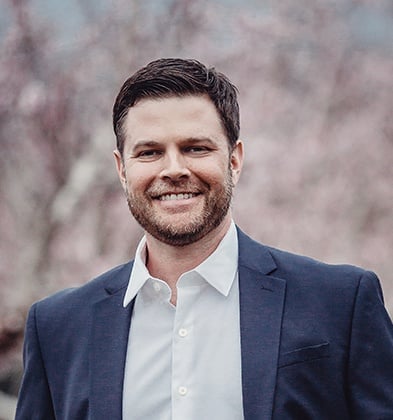
Meet Todd Laire, Co-Founder and CEO at LAIRE Digital, husband to Laura Laire, and loving dad to his two kids, Tristan and Skylah. With a passion for helping businesses succeed, Todd equips LAIRE clients with the ultimate toolkit for internal alignment, sales enablement, and skyrocketing revenue. His entrepreneurial journey began in 2001 with small business marketing and advertising. His real superpower was unleashed when he harnessed the internet's magic, using cutting-edge website and online marketing strategies. When he's not busy transforming companies, you'll find Todd running, lifting weights, conquering hiking trails, carving snowy slopes, or swinging clubs on the golf course.
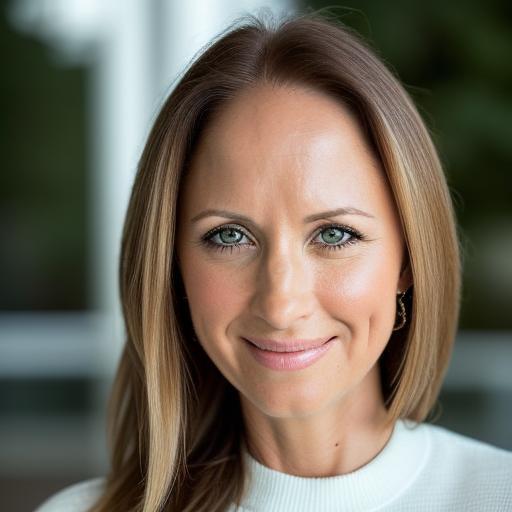
Meet Laura Laire, Co-founder and VP of Creative Strategy at LAIRE Digital, wife to Todd Laire, and loving mom to her two kids, Skylah and Tristan. With an entrepreneurial spirit spanning two decades, Laura's passion for creativity, high performance, and continuous learning is contagious. From developing and launching products and company training materials to becoming a seasoned keynote speaker and trainer globally, Laura thrives on leading teams, seminars, and conventions with unmatched enthusiasm and passion. When she's not cooking up big ideas for LAIRE or providing creative direction and strategy for client brands at LAIRE, you can find her developing recipes, practicing yoga and meditation, biking, hiking, playing tennis and writing.
Are you passionate about marketing? Do you have unique insights, inspiring stories, or valuable expertise to share? We’d love to hear from you!
The Married 2 Marketing podcast is always on the lookout for enthusiastic and knowledgeable guests to bring fresh perspectives to our audience.
Fill out the form to request to be a guest on our podcast. We review every application carefully and will reach out if we think you’re a great fit.
