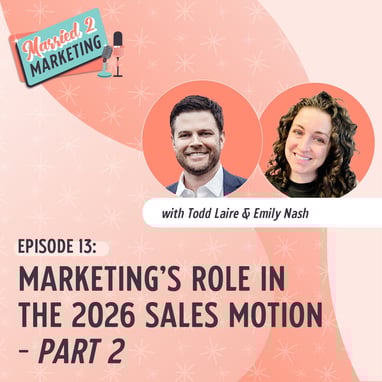
In this episode, Marketing Strategist Emily Nash and Co-Founder and CEO Todd Laire go deeper into the shifting relationship between marketing and sales, focusing on what happens after the handoff.
They explore how sales is changing in 2026, marketing’s evolving role within the pipeline, and how AI is influencing the buyer journey. You’ll get a clear picture of the trends reshaping revenue teams and actionable steps to adapt.
Tune in for real talk on post-handoff strategy and how to use AI effectively without sacrificing the consultative, human-first approach buyers expect.
Todd Laire (00:40)
Hey everyone, welcome back to marketing's role in 2026 as part of this sales motion that we know all too well. I'm joined by my lovely co-host here, Emily Nash, marketing strategist at Laire. And yeah, welcome back, Emily. Yeah, so last podcast was so good. We both agree that we just, couldn't cut it off. There was just too much to...
Emily Nash (00:57)
Hey, thanks, good to be here.
Todd Laire (01:07)
continue to talk about. And so we decided to do impromptu a part two segment ⁓ at the end of the last podcast. So here we are fulfilling our promise to each other. And I thought might be helpful to just quickly recap what we discussed last time. What do you think, Emily?
Emily Nash (01:24)
Yes, of course, let's tie it into what we were just saying.
Todd Laire (01:28)
All right. So we definitely got into the elephant in the room, AI and its role between marketing and sales alignment, but then also using it as a decision making partner. And obviously we're seeing a lot of that with, buyer intention, website traffic, search queries, attribution is starting to reveal more and more AI or as we
here, ask engine optimization and ask engine usage. And then you couple that with longer than what we're used to. Maybe it's the new normal, longer buying cycles. And not only that, more complex, more decision makers, more components that are dependent on others in order to move forward and have a green light to purchase something. Specifically, think
but we see a lot as in the business to business or B2B space. But we also talked about the tried and true methods of old school follow-up, the fortunes in the follow-up, handwritten notes, in-person interactions, events still matter. And then obviously coupling that with the latest trends and what we're seeing in technology with AI. What else did we get into?
Emily Nash (02:40)
I touched on AI, of course, shifting buyer behavior, some work, less touch points with people, they're their decision points online, longer decision cycles, I think that may persist in 2026. And then that reshaping relationship and how marketing and sales align and supporting each other. And then of course, the person connection being surprising and still contender in our tactics for closing the deal.
Todd Laire (03:09)
Yeah.
Emily Nash (03:09)
So
let's pick up where we left off. Let's dive deeper into what happens after the handoff, how to create seamless consultative sales experiences and how both teams can operate as one unified revenue engine. Want to jump in? So let's talk about changing sales in 2026. What new pressures do you think sales teams will face in terrain the next year?
Todd Laire (03:24)
Sure, yeah.
Emily Nash (03:34)
We have economic slowdowns, leadership shifts, tech overload, talent changes.
Todd Laire (03:40)
All of the above. I think sales quotas will be even more intense for most enterprise teams. We run into that with some of our software partners that we co-sell with. I think it's also, there's increased pressure from a shareholder perspective on down to the last few years haven't been great economically. so companies are trying to, and teams,
more so are trying to make up for lost ground. and you know, ⁓ part of some teams, they didn't hit their, goals for last year, but they're increasing their goals this year. So they're gonna hit their goals from last year, this year and hit this year's goals. so yeah, lots of pressure, you know, and at the same time, like quality lead attribution, quality lead generation is a big topic as well.
You know, we've run into this too, Emily, like paid media, right? So we're seeing an impact on organic search dropped, you know, like it's down globally across the board. Big reason for that is AI, but it also impacts paid search. So companies, think that are trying to grow aggressively will just forget about trying to grow organic, which is in my opinion, I think you agree directly tied to success with AI because AI is
know, scraping the web and scraping search engines and then coming up and delivering recommendations and along with that opinions and you know, with their prompt returns. But it's also impacting paid media. So teams that are dialing up and saying, forget it, we'll just make up for it in paid media. They're not gonna have the results that they're used to. We're seeing that trend with big paid media focused only agencies that they're just.
not able to deliver the demand that their clients are expecting and spending more on paid media isn't necessarily doing it either. So, yeah.
Emily Nash (05:30)
Yeah,
dig into that a little bit on the paid piece. Right. So you see organic traffic down. We've seen it 50 % in some cases, like directly in half a year ago. And so then your response or reaction is to go into paid. Maybe you've never been there before or you are there and you're going to increase it to increase that traffic. If you're thinking that and the report I read from maybe SEO journal,
was that everyone's doing that. so then costs are increasing. So everyone's going into the same auction with their same daily bids. And that increases the cost per click and the views, whether it's Google or LinkedIn or other channels. So then it's more expensive to pay to play than ever before when you're trying to increase traffic. Is that what you're saying?
Todd Laire (06:11)
Yeah. Yeah.
Absolutely. Yeah. Yeah. Wouldn't you agree?
Emily Nash (06:17)
I am a great I'm seeing it. It's just it's challenging. So we should talk about how do we combat that like we still need to focus on organic. Definitely agree with you there. I think that's a layer differentiator that we always focus on the long play and getting the squeeze from a longer opportunity to get that organic traffic over time. But paid I think it just it's it's it's a specialty that has to be more dialed in more so than ever before if it hasn't already been.
Todd Laire (06:44)
Yeah, definitely. And I think too, like a holistic picture into marketing and driving, you know, quality lead generation. So what else are you doing? You know, ⁓ you know, obviously the webinars and the videos play a role, running campaigns to contextual ads. So, you know, maybe getting away from dumping so much into paid search and putting that more into paid media.
and using things like video and slide shares and more interactive type content. I think there's always gonna be a place for that. But then, webinars, scheduled webinars and events, and I think maybe the jury's still out. Like we got webinar to death when the pandemic hit and that's really all you could do, but I don't think you should erase that from your marketing schedule either.
Obviously events still, mean, I'm an old school like to see people in person and have direct one-to-one conversations. think events and traveling, sponsoring events is still relevant. So if you're doing all of those thing podcasts, like what we're doing here, right? Like having candid conversations, talking about our topics, like how do we grow business in an ever complex and...
and changing and shifting time. I think others would be able to relate to us or relate to you if you're putting on a podcast and want to have a conversation because you're demonstrating subject matter expertise and have forthcoming knowledge on something that they might be struggling with. Content is king, context is queen, as I've heard. So I think as long as you're distributing it off.
in multiple ways, multiple channels, then repackaging it, repurposing it, and sharing it, cross-sharing it through different platforms, then you can ease the pressure on your paid media budget, hopefully, because you're driving some, not search, but true organic leads through them coming across your content, and it's something resonating with them about it.
Emily Nash (08:44)
Well, you sound like Yamini at HubSpot. That's what she led with it. She said more channels, more ways to consume your content. That's why they lead with podcasts more so in 2025 than ever. And they do like short form video, a ton of different content, and then just getting beyond just your one channel. So if you're on one channel at Google, focus on others and then all your different types of content. think this is an example of it. Like I'm speaking with a founder of the company. So if I could get the founder of all my clients on a video chat,
Todd Laire (08:47)
Ha!
Emily Nash (09:14)
and have a conversational piece of content and be able to repurpose that, that would be amazing.
Todd Laire (09:18)
Yeah, absolutely.
Emily Nash (09:21)
All right, let's keep going. How has the buying process changed even more dramatically in the last year? Are decisions taking longer, are more stakeholders involved, are buyers going even deeper into research before talking to sales?
Todd Laire (09:31)
Yes,
love this and I've come prepared with a story. So we are, our agency is in the market for some enablement software. And this isn't what you're thinking. This is some other software that you haven't really been brought into yet, Emily. evaluating this, you know, at the same time that we're onboarding to the other that you know about. so it's really more project enablement.
related, like on the client side, has to do a lot with the CRM consulting that we do. then, here's the challenge. Let me start with the challenge. The challenge is, how can we, as an agency, create more value for our clients with their usage of software that we recommend to them? As we know that pain point, to help them grow, we...
share with them everything that we can do, and then also what technology can do in us working in tandem with that technology. And I think a pain point is, they getting a hundred percent, not possible at all, but are they getting close to a hundred percent usage of that investment in the software? And so we're trying to create, trying to solve for ways to create more value for them. But then also kind of the side of that is, for lack of a better word,
create more dependency on us, so that they see value in us. And so we're evaluating the software that does this. And it's fairly complex. the company that offers it is one of a few. And they know that their product is complex, and it solves for complex issues. And so the buying process has been absolutely delightful with them. And our business executive, business development
representative at the company has been so dramatically thorough with us. And I'm a salesperson, I run the sales for our agency and I've invested a lot in sales training and I've read sales books and I belong to membership groups and forums and I've been selling for 25 years. And so I've learned the tricks of the trade and I just love
watching this person in action because they do all the things I do that I've learned over the years, but what I especially like is how he uses those things in conjunction with how the software solves their customers issues. And what he does is he makes sure through just about every thread of conversation that we have that he's identifying problems we're trying to solve for and then trying to match his software with
how it might solve. And it has been just a delightful consultative sales process through and through, so much so that we've been at it for six months. I know it sounds like a nightmare to a salesperson, but I wouldn't even think of this individual as a salesperson because he's truly been a guide, you know, for lack of a better term and a guide that, you know, has an end agenda to ultimately sell us on the software. But what I love about it is that
He's just continuing to go towards, this answer your question? Okay, this is what I'm receiving from you and this is what I'm delivering back and how this, our product can solve for your issue. Are there any other issues? Instead of like, okay, do you understand? Great. Now let's go to our pricing page and see what subscription would be best for you. He's just not doing that. He's just like, until there's nothing left to talk about, no stone unturned that...
We're basically asking him, okay, where do we sign up? How, how, do we get started? and a few things too, like obviously a lot of selling is happening virtually, right? Like we're dependent on video cameras and things like that. And so like I run into that, like teams, entire teams that I'm selling to are not on camera. There are just, and so I don't know if they're paying attention to me or not. And, depending on how they got to us, if I, you know,
brought our agency to them and prospected them, then I'm kind of like at their mercy, if you will, like on how like, hey, I'd love for to see all on camera. Hey, Emily, your camera's not working. there a problem? More so if you came to me and started going through our buying process, then I might suggest that you turn it on. And we were on a call the other day and I couldn't help but just grin here to here. And one of our team members was not on camera and he was like, Hey, do you mind turning on your camera? And I was on camera.
And I just loved it because he was exerting some authority there and exerting a preference. But it was also going to help him solve for us. Like, are we getting what he's saying? Are we paying attention? ⁓ I love that. also, too, never ever leaves a meeting with us without booking a follow-up communication, follow-up meeting.
how he's going to deliver, like the homework that he's assigned himself based on what we've given him, homework he's assigned to us. It's just been such a delight. So I could go on and on about this individual. But that is the sales process. know, I mean, even if I think putting it all aside, if today and it is the buying process is more complex and the buying cycles are longer, this is the way to do it. Consultative selling, know, continuing to ask like.
What else are you trying to solve for? What else are you trying to fix? Let's try something else. We've been in a demo account. We're on a free trial. We've built things out that eventually will expire, driving more dependency on this software to ultimately buy it. One, to solve for our issue, but two, to get the time back that we've invested in the sales process, getting familiar and building confidence in the tools. So I think.
That's the way to go and I hope to see more teams adopting this. I mean, the person that we're working with definitely is more senior experienced, but he's not doing anything that can't be done by the most junior, you know, sales rep or SDR, business development rep that's coming into, you know, into their careers.
Emily Nash (15:32)
He sounds like a total pro. It sounds like he's building trust through pain, like solving for your pain, which there's a lot of probably in 2025 and 2026 things have moved so fast. So people are just in weird positions, like wanting to know what makes sense for them for growth. And he just kept asking, what's your issue? How do I solve for it?
Todd Laire (15:38)
Yes.
Yes.
Yeah,
yeah, can you?
Emily Nash (15:53)
I can see people
getting junior, more junior or anyone who's more novice getting stuck in the process. Like, how can I get you from lead to opportunity or to meeting book, to meeting book, to demo or whatever, and forgetting to like the person on their side and just being consultative, like a Sherpa along the way, a guy.
Todd Laire (16:09)
Yeah, he is.
He's a total Sherpa and he's guiding us to K2, know, or Everest base camp. mean, and there's just, there's pitfalls along the way and you know, there's definitely rabbit trails and things that aren't as relevant as important. And he's managing all of that and keeping us on, on tasks, building confidence, building trust, you know, almost to the point of like, you know, we've talked pricing a little bit and that model's changed. Like at the beginning we were like, okay, we're thinking users wise.
how much, he's like, well, you know, this could easily be an enterprise solution and it'd be, you know, a couple thousand dollars a month. And we're like, okay, well, that doesn't scare us off, but then what do we get? Six months later, now we know what we get. And we're actually realizing we don't actually need that. That reminds me of another sales experience I had, my wife and I years ago, like eight years ago, we were in the market to buy a Tesla.
And ⁓ at the time it was a new concept where it wasn't necessarily like a dealership, but more so like a physical place you ordered your car to be built online. You just go and see it, you know, and interact with it. But then you're not driving it off the lot that day. You're actually building it online on their website at the dealership with your sales consultant going through it.
Emily Nash (17:12)
Okay.
Todd Laire (17:27)
And one thing I'll never forget is we were looking at the SUV version and it's the kind, it's the X model and it has the Falcon doors that open and close, you know, like Falcon wings. And it's really cool. And this is like 2016 going into 2017. And so it was a relatively newer model where they'd had their sedan model out for, I want to say probably five or six years already at that point.
And we were talking about like, this is kind of our needs and all that. And he just really deduced like, what exactly are our core needs and could multiple of their products solve for that, not just the SUV. Cause we went straight to SUV thinking we have a family, we have sports, we have money stuff, like we've got friends, we've got pets, like we need more room to throw it in the back. And all of those things we presented to him actually could have been solved.
just fine with the sedan model that had a longer running track record and better maintenance and repair reputation than say the newer vehicles that just don't have the track record yet. And he just straight up honestly said, knowing that the SUV, the X model with the Falcon wings was more money, know, cost more than the sedan by like, I think 15, $20,000. And he would make less commission recommending
the sedan model to us because he said, we have not seen everything yet to see with what goes wrong in this newer version. Those Falcon doors, they will break down. They will have fault. So if you're open to it, might I recommend our less expensive but more tried and true workforce sedan model.
And I was just floored with that consultative approach. She actually recommended something that would better fit us, make him less money, but it was truly solving for our needs above all else. And you know, another experience I'll never forget.
Emily Nash (19:23)
I was thought that the store was gonna go a different way. I thought you were gonna talk about how going to the dealership and talking to someone was like that 2016 experience because yes, I too bought a car, went to the dealership. was long and I don't care how consulting he was or how much he cared about my pain points. It was in person and it took up my precious time. Flash forward to about three years ago, we had a car delivered to my house. I literally had a call online, they checked my face and
Todd Laire (19:46)
Yeah.
Emily Nash (19:53)
you know, took my identity, signed a contract and had spent whatever the car fee was, had it delivered by Carvana, delivered to my driveway. White glove experience. So I don't know if that's a learning for where we are in the future. Like if I cannot go to a dealership and talk to someone ever again, I won't. So I don't know if that's for 2026. Like it's nice having consulting experience.
Todd Laire (20:10)
Yeah, yeah, thousand percent.
Emily Nash (20:17)
And then if I could have more touch points that are me directed and don't take up as much of my time, I think that could be where things are going.
Todd Laire (20:24)
Yes, 100%. We ordered one recently and ordered it online from the comfort of our home. They told us when it was going to be in and where to pick it up and we went and got it and it was an hour in and out, know, check in, show ID, get a quick walk through, really the most time took like showing us how to use the car, which was nice. It's hard to replicate that through delivery, although I could see that happening. But in the future, which I would much rather have it delivered to our house too.
And that is why Carvana and some of these others that you know are so big in the market But pretty soon, know electric fully autonomous cars just drive off the sales floor To your house and then give you a virtual tour of itself in your driveway that would that's coming
Emily Nash (21:08)
Okay. This conversation
is going in a couple of directions. One, I'm curious, this is not on my agenda at all. AR or VR? that have any, I know we talk about it a lot, does that have any place in the sales process for B2B? I know there's also like, we do home builders and that kind of thing where that can make sense. Is anyone touching that?
Todd Laire (21:30)
Yeah, AR augmented reality, right? So you see reality as it is, but then there's superimposed things in place. Absolutely. I think I'm seeing it a lot. mean, you you hit on a construction. My wife was looking at a pool design, took pictures of our house and submitted it to this tool. And then it's superimposed different designs of pools in our backyard.
looked real like it was out there right now. Fascinating. Talk about building buyer confidence. You know exactly what it's going to look like. And then you can make adjustments. Before, you just kind of had to break ground and hope for the best. Where virtual reality is, back, think I'm just thinking of property again. I can tour something and not actually have to physically be there. And so that's an idea. That's a design.
Emily Nash (21:59)
Mm.
Todd Laire (22:25)
⁓ that we're seeing more and more too, you know, in this day and age, which is also like, just takes the limits out of buying constraints, you know?
Emily Nash (22:35)
Yes, I don't want to get into specific lines, but trying to think if that's going to be down the line for 2026, like where that fits in showing up properties, new homes, breaking ground, that kind of thing. right, bring it back to our topics today because that's kind of kind of a niche for some clients with external uncertainty. We may have touched on this a little bit. We have policy market volatility, changing customer expectations. How is that reshaping how sales teams prioritize plan and forecast?
Todd Laire (22:46)
Yeah, yeah.
Hmm. Yeah, that's a, that's a big question with a lot of variables in it, right? ⁓ you know, I think commitment is important. So can your product be returned or is there churn that, you know, you have to account for in like specifically like forecasting and planning. you know, obviously we're always planning to grow and keep every single client we bring on and then add.
to them so that we can we can forecast and grow but you know it'd be foolish to think you're gonna have a hundred percent retention in any business and so you have to plan for attrition you know as well and then bake in your growth numbers with that in mind you know and considering that you know AI policy is is gaining more steam as well like how companies just like privacy policy you know it's also like
good stewardship in using AI and what your clients or customers should know about how you use it and how you use their information. So we're kind of seeing how that's coupled with privacy. Obviously selling information is a hot topic for many buyers. All of us actually, we don't want our precious contact info sold or used in an nefarious way.
So communicating that, being transparent on, you know, like we've developed an AI policy and put it on our website. ⁓ Other agencies like ours have followed suit. You know, we're seeing that, you know, in more general company usage as well. So arming marketing and sales, knowing that those things exist and how they may impact the work that they do, you know, and again, in an effort to...
to share more transparency around it through the buying process. Like obviously we want to build trust, want to have transparency, want to build confidence, know, like and trust, right? And so all of those things are intertwined.
Emily Nash (24:57)
Yeah, I'm curious if other clients have stepped into that. And actually, it would make sense for some SaaS clients and their product and how they use that. For us, it makes sense because we're working within kind of intellectual property and how that comes across. Let's keep moving. ⁓ What does it really mean for marketing to operate as part of the sales motion rather than as a separate pre-sales function?
Todd Laire (25:11)
yeah. Yep.
Yeah, so let's dive into that. You're on the marketing side, I'm on the sales side. I have expectations from you on what would best help me. If we're working together on the same team, I have expectations of what I should be receiving from you to help me accomplish my goal, do my job well, and grow my end of the company.
Having said that, you also have expectations of actions that I will take, you know, based on your hard work and due diligence. So maybe we should dive into that.
Emily Nash (25:55)
It feels a little heated because naturally there's actually skin in the game. So yeah, yeah, I mean, it comes, well, take a step back. What I read recently this morning is that where we are in 2026, no more reaction. There's a lot of change in 2025. People are saying, I need to go here? This traffic dropped. What do do next? So in 2026, if we could just get aligned on one metric, we all look at this North Star. And maybe there's other things.
Todd Laire (26:00)
Yeah.
Emily Nash (26:24)
along the way. But if I'm focused on traffic and you're focused on meetings, like we're not aligned in our one key metric. So if we, you and me, and then also like anybody who is in charge of an AM, like who's in charge of clients, what their metric is, we all have one key metric. I think we can align and have a more simplified North Star in growth.
Todd Laire (26:45)
Yep, yeah, typically I would probably.
Emily Nash (26:47)
So three,
two, one, say your metric and if it's the same, then we're.
Todd Laire (26:51)
Yeah, I would say revenue.
Emily Nash (26:53)
Yeah, yeah, yes. Well, there's a conversation coming to you on that one. We're trying to get it tied into HubSpot.
Todd Laire (27:00)
Yes. Yeah. No, I think that's the North Star, you know, and removing silos in teams and reforming around a central North Star, which absolutely should be revenue or something that is the equivalent of that in an organization, which is usually always that.
Emily Nash (27:22)
Yeah, it is. think for a builder, they may be focused on meetings kept before they get to that final revenue piece.
Todd Laire (27:28)
yeah.
Yeah, well, collective teams, all, you and I both are focused on revenue, but what are our metrics below that that specifically apply to our job? And you're right, meetings, you know, kept, contracts signed, quotes given, you know, all of those things. Yours would be, you know, traffic, lead generation, sales qualified, you know, opportunities, you know, win backs, you know.
customer marketing, I always bring this up with prospects we talked to that have the ability to sell and resell current and past customer relationships. customer marketing is probably one of the most underserved areas of most all companies. They just end with the sale and then just continue to go market. as we know, it's harder to win and find source, find land ⁓ and win.
a new customer than it is to do all that with an existing customer because the trust is already there and the reputation is built.
Emily Nash (28:28)
So customer marketing and former customer marketing are some opportunities. And then maybe there's some AI layered in where you can learn, synthesize what information you have, calls you've had, recent things, why they left back in the day, or why they're still customers and what you recently been working with them on to help make that sale.
Todd Laire (28:51)
like bringing marketing into it, like in kind of that consultative role.
Emily Nash (28:57)
Well, there's two sides of it. I was thinking if we have opportunity with past customers, so customer marketing for past customers are no longer with us, and this is open for lots of our clients, and it's probably forgotten territory. Like they've known us before, there are no quantity, they left for a given reason. What was that reason? Well, rather than having anecdotes like from Bob or...
in sales who worked with them four years ago and be like, oh yeah, this was what I knew about them, you can point to a transcript and pull real data and say, this is why they left and build a personalized campaign around that. And then it's a little different for customers where you would bring in like an SME, for example, to help be that sherpa at that point.
Todd Laire (29:29)
⁓
Mm-hmm. Mm-hmm.
Emily Nash (29:42)
Did I get, did we align on that?
Todd Laire (29:44)
Yeah, yeah. So if I think about, yeah, so I'm thinking about my current experience. And it's like, we get into the weeds with this product that I'm evaluating, going back to the story. And I'm just like, Mr. High Level Guy, like, we came to you because I'm trying to solve for this. Like, how does this, and it actually does what he's showing me, but it's so granular.
that I'm kind of losing sight of like, are we still talking about what I originally wanted to solve for when I came here? know? And so luckily I have a counterpart at Laire that is also evaluating this, that is eating up the granular stuff. It's like, it's his job to know that. Like he's going to be doing these things that we're going over. And I'm part of it to be exposed to it, to also learn and have ideas. But a lot of it's kind like over my head. So I'm like losing, not confidence, but
kind of like my losing, like, is this still solving for what I wanted to solve for, you know, even though we're so in the weeds here? So I would think if I didn't have this counterpart that was just eating it up by the spoonful and I just was like, I don't know, then yeah, then he'd need to go back and revisit call notes and summaries and action items and bullets and things to kind of reintroduce my pain that he's trying to solve for.
that we supposedly got way off track on into the weeds with product features and details. Maybe we got too deep with product features and we're not aligning them with the benefits, right? Like stop selling features and focus more on benefits, because that's what us as buyers actually care about. So I could see some redirection there.
Emily Nash (31:30)
That makes me think that we as account managers, in some cases, who work with clients every day should maybe go through a demo with our clients. And if they're just going through features, we can find friction right there in the sales process.
Todd Laire (31:44)
Yep. Yep.
Emily Nash (31:46)
And then also it sounds like your savvy salesperson is dealing with a buying committee of like the high level guy, you, and then the everyday person is gonna use it and he's having to navigate those two decision makers.
Todd Laire (31:58)
Yeah, yeah, that's tough. I run into it is we're down the road already with somebody like maybe they're more influencer rather than decision maker. And that's important to identify upfront like, yeah, what's the buying process like on your side if you got the green light? Do you need approval? Like, are there others that are involved? Like, and we get kind of those false answers like, no, no, I'm it. Like, yeah, no, I just need to know everything here.
And then they're like, okay, this is great. I great. When would you like to get started? Well, I've got to bring in my manager or I got to bring in my, uh, you know, accounting person or whatever. So they understand. then we have to start all over again. We have to reintroduce the pain and, know, reintroduce the solutions and then show, you know, how we can solve for that. And like, that's just a time and momentum killer too. Um, right. that, that's, that's adding complexity and time onto the.
the sales. So you could try to prevent that as much as possible. think most of the time if you're following a proper playbook, you're going to recognize that right away and then say, there any objection to adding them to our next call so that we can discuss it together? Or sending them the summary. We do that, right? Somebody can't make a call at the last minute, but we continue with who we have and then we send them the recording and the summary and all that.
⁓ But hopefully they watch it and you know, there's tools now that I can actually track if they watched it or not. So that could be helpful, you know, as well. But yeah, more complexity there.
Emily Nash (33:29)
Sounds like it. All right. We're talking about complexity. So how are we going to adapt to longer buying cycles?
Todd Laire (33:37)
Hmm, it's kind of a $64,000 question, isn't it? Well, know, back to my experience, continuing to push for more product knowledge building and solution and problem solving through solutions presented. So much so, you know,
I mean, maybe it really should be, Emily, maybe it really should be an 11 to 12 month sales process, depending on what you're selling, how big, how complex. you know, maybe you've hit some home runs that you landed something in a month, but it normally should have been a six to nine month, 11 month process. And maybe that's been this approach of this, this excellent consultant that we've been working with, knowing that it's kind of, you know, he understands our needs. He understands our timing.
So he's always known, it's been like, let's revisit this in the fall, we'll have a better, we'll have better bandwidth to go through it, we'll slow down some so that we can get into it. So he's just kind of been prepared knowing our timing and has been delivering value in a way, like in between followups, like I will share content from our website that I think they would find interesting based on their relevancy, know, based on.
what they're trying to solve for and not just like case study type stuff, Emily, but more so like, you know, this, you know, what is this and how can it work for you in your organization or, you know, what is this concept and, you know, why should you not ignore it? You know, and it's kind of like introducing something that you're definitely going to get into in the sales process, but you're introducing it early enough.
so that when you reference it and you can kind of check with them too, like, hey, how's it going? How's it been since we last spoke, all that. Did you get my email with a few of those resource articles that I shared? Yes, I did. Were you able to review them? yeah, I scammed them. Did you catch the part where this was brought up? Because that's kind of what I wanted to dive into today. And so if anything, we find out, are they actually reading the content that we're sending them? And two, where are they at?
in their knowledge building process where I can meet them in the middle and then continue the journey with them together.
Emily Nash (35:54)
I've experienced to do that firsthand for one of our clients. He was referencing a book you referenced and then requested our expertise to see if you should read the second one that came out for additional information.
Todd Laire (36:04)
Hmm, interesting.
Emily Nash (36:05)
all about the inbound cycle. So we are educators in the process. Let's keep going for about a more minutes and then wrap it up with some of the stories you've told and what those findings are. So how do we build credibility when younger buyers bring, well, in some cases, 10 plus external influencers? They have communities, creator consultants. They bring these into their decisions. And I pulled this from Forbes recently.
Todd Laire (36:09)
Yeah.
So you cut out ⁓ that last line there.
Emily Nash (36:37)
It sounds extreme, so I feel I should source myself. So I pulled this from Forbes that buying committees are increasing. This could be for large purchases, quite large purchases. So just how can we talk about how we can help with that process?
Todd Laire (36:49)
Yeah. So one thing that comes to mind is nothing new, but like, obviously, like you have some internal champion that you're, you're communicating with, you're working with that is assembling these others. Right. So one is obviously understanding to, you know, the, the nth degree, like what that individual is trying to solve for, what are they trying to get out of it? But then not assuming that that's everybody else's as well. So.
the more members than you want to know. One thing I'm a big fan of doing in a call is like, here's what I plan to cover today, Emily, on our call, this, that, and the other. What are your expectations? And what would you like to get out of today's call? And that can be so revealing too. Even with the person you think you know, based on the last call, all that, that's what this sales consultant does with us.
This is what we talked about last time. This is what you were interested. This is what I mentioned. You know, is this still the case? And is there anything else that you'd like to cover on today's call either related to this or otherwise? So understanding that with every point of influence that gets brought into the sales process, what do they want? What are they looking to get out of this? Why are they in this process? And so like, how can you cater them? Cause
What you want to do is you want to create a fan base here with this committee of how you've been working tirelessly on trying to solve for what they're looking to accomplish.
Emily Nash (38:24)
I think in that process, because you're skilled salesperson, we hear your expertise and how you approach it, just like the Sherpa you're talking about. In addition to that, you're having digital touch points. So they're in our newsletter. They're getting those emails. They're opening those during the process, learning about what we have to say, what we're sharing, blogs we're writing about, and our expertise. So there's additional digital touch points that are happening, nurturing them as if they weren't a lead in the process. But when they are, they start to open up a little bit more. Hopefully that's.
giving them at different angles.
Todd Laire (38:55)
Yeah. yeah. Yeah. And, you know, some people read, some people watch, you know, videos, some people just want to hear it straight off the cuff. So like, it's kind of like, how do you like to digest your information too? And then balancing all of the different personality types that go into that and the mediums that they prefer, you know, how they, you know, do their research, do their due diligence and investigation. you know, and like going back to
This is why you have podcasts and webinars and videos and blog content and downloadable stuff. And then the interactive things like you need something for not just every point of influence in a buyer's journey, but then you also need to have multiple mediums based on that buyer's preferences or the different buyers. Like, so they might go through the same journey, but they receive things differently or have preferences along the way. So
you know, like, oh, at this stage in consideration, we're gonna have this one or two or three different blogs just on this topic. Okay, well also need some videos, you need some podcast topics, you need to have, you know, a talk track and an event that covers that too. You know, cause knowing that you're gonna hit people at different stages of their journey, but then you're also gonna hit different preferences on how they digest and review and absorb information as well.
Emily Nash (40:19)
Yeah, one thing I think marketing might be able to get good at any place and Larry included is getting into around, uh, campaigns by the quarter or cut it a year and a half, whatever you choose, and then focusing on one topic and every type of way of sharing that topic, whether it's podcasts, webinars, pillar pages, downloadables, small videos, and you just like go after that topic and dominate there.
Todd Laire (40:37)
Yeah.
Emily Nash (40:45)
Reacting like we didn't a of people did in 2025 or always do and say AI write about that or This topic is important like going after one topic and really going deep into it across all channels And then everyone knows you're talking about so everyone who gets on a sales call knows what that theme is Yes, okay, I my idea while I'm in there I'm out maybe lead in with one question
Todd Laire (40:57)
Yes.
Yes. Yeah.
Emily Nash (41:08)
Some of the research prior to this podcast was saying that these buyer cycles are not wanting to necessarily talk to someone. They're wanting to make their buying decisions before then. But it sounds like Todd, you're having a lot of conversations. So, and you're great at them and people do want to talk to us and they're getting educated along the way. Do you see that fading or changing or people ever, ever swiping a card on the layer website without talking to anybody or any SaaS company or anything, service company?
Todd Laire (41:16)
Mm.
I think so. think, yeah, you know, like we have a pricing page. We have, we pretty much have everything for somebody who is somewhat knowledgeable to make a decision and then just say, let, you know, I want to kick the tires in person and then away we go. And so that's kind of like the miracle slam dunk, you know, you're buying cycle of a week, two weeks, because maybe your website experience is thorough enough to, to drive that. Could we add
a shopping cart and add engagement to my shopping cart and check out and sign an agreement and go and then schedule your kickoff call, like all automated without talking to anybody. Absolutely. And maybe that's something we should look at. I probably complex, complicate that process a little bit just to screen and make sure there's fit as well.
been doing it long enough, like it's a relationship based business. You know, we're not a generic company, like we're a family run business and my name's on the sign, right? Like literally, that means something. That means something to our buyers too. How do I replace myself? Well, I think the brand as it grows, you know, certainly could be about the brand and not the individual.
But right now and could that role that I'm filling, know, it gives me significance and importance, right? But could that be replaced through AI? Sure, definitely. know, and make could AI do an algorithm and run like, yep, this client's a fit based on these factors, these signals, we recommend proceeding. And so then like they're ready to check out or they have checked out and it's pending or approval on our side.
and we look at it and AI is recommending it. It's kind of like we rent property. know, we're real estate enthusiasts and we have rentals and we do a credit check. You know, obviously we should. And that's pretty much automated. And so they, you know, we don't grab any info. It's all in the application. It's all in, that's automated. They want to rent it. They click to, you know, rent it, proceed with the process. Next step is credit check.
They put in all their information, they pay for it. And then it says pending, you know, and what's pending is it sends us their application with recommendations. Should we rent to them? Green check. Should we be cautious? Yellow stop light, right? Or should we reject red stop light based on what factors? And then from there, we just say, yep, we agree or we don't agree. And then we don't talk to them. And then it goes right back to...
Emily Nash (43:42)
Thank
Todd Laire (44:07)
the renter and tells them that they're in or not and if they're in then you know we're talking money and they're signing a lease and You know, we're giving them keys all that could be automated without them seeing us But then the other side of it if it's messy, we don't have to get involved either By telling them no the the credit check software tells them no. So that's nice We could do that
Emily Nash (44:29)
Interesting. I'm not sure if that's the 2026 right around the corner, but could be something. So what you're telling me is that you can both order a car, have it delivered to your house, order an agency and being in a marketing engagement at the same turn of a finger.
Todd Laire (44:43)
That's something for us to work on, isn't it?
Emily Nash (44:45)
If I can get a car to my door, why can't you get a marketing engagement? Just online. Yeah, just like Amazon. Well, yeah, that could be another episode. How can you be more like Amazon if you want to be or more family run? be a debate.
Todd Laire (44:49)
That's it. Yeah, just like Amazon. Just add it to cart.
think you can do both. Yeah, and maybe there's a third option.
Emily Nash (45:04)
Yeah.
All right. Well, anything, any takeaways or anything you're watching for in the next three to six months as it relates to trends in sales and marketing?
Todd Laire (45:10)
I'm still doubling down
on education. One of my favorite quotes out there is, know, the businesses that are the best educators will be the most successful because of that education component, that story I told about going through this consultative sales process. I've learned so much more so it's brought me more value into how to use this product once we do invest in it because we've taken the time and have been thoroughly introduced to it, seen use cases.
used it live, you know, and so it's like getting a car to test drive for like not just a day, but like three weeks, you know, a month to really interweave it into your daily life. Like, I mean, talk about buying, you know, buying confidence through, you know, letting the product do the work for you first. So yeah, that's mine.
Emily Nash (46:01)
What am I watching for besides the podcast I typically listen to, which is AI Daily Brief and Marketing Against the Grain. I'm wanting to simplify and be more intentional. So I don't want to just, ⁓ okay, there's a new AI to use, there's new version of it or something. I want to be simplified and very focused. So like I said, a campaign for the first quarter and then every type of way to share that for all the different types of learners. And then
Intentional with I specifically use this tool and this is why and I don't use the other tools and take out the noise. All right, that's a wrap let's wrap it up
Todd Laire (46:33)
Love it. It's great.
There we go. All right. Well, I hope everyone enjoyed the episode. Emily, thank you so much for being my co-host on today's topic, our part two of the two-part series of how sales is evolving and how marketing is impacting that in 2026. And I hope to get this out soon to everywhere you listen to podcasts. Take care, everyone. And yeah, keep at it. It'll pay off.
Emily Nash (47:04)
Pay off. All right, thanks. Take care.
Todd Laire (47:06)
Alright, take care.

Meet Todd Laire, Co-Founder and CEO at LAIRE Digital, husband to Laura Laire, and loving dad to his two kids, Tristan and Skylah. With a passion for helping businesses succeed, Todd equips LAIRE clients with the ultimate toolkit for internal alignment, sales enablement, and skyrocketing revenue. His entrepreneurial journey began in 2001 with small business marketing and advertising. His real superpower was unleashed when he harnessed the internet's magic, using cutting-edge website and online marketing strategies. When he's not busy transforming companies, you'll find Todd running, lifting weights, conquering hiking trails, carving snowy slopes, or swinging clubs on the golf course.
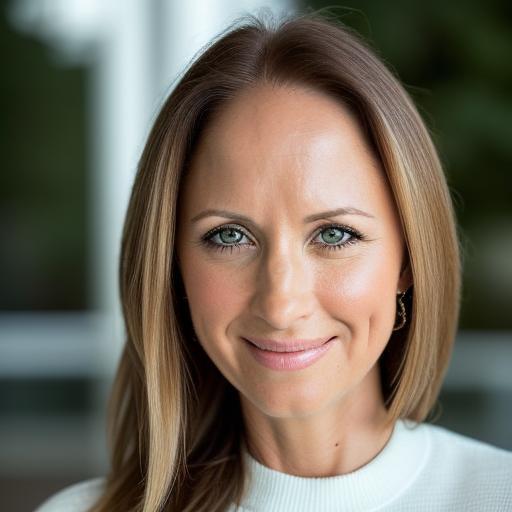
Meet Laura Laire, Co-founder and VP of Creative Strategy at LAIRE Digital, wife to Todd Laire, and loving mom to her two kids, Skylah and Tristan. With an entrepreneurial spirit spanning two decades, Laura's passion for creativity, high performance, and continuous learning is contagious. From developing and launching products and company training materials to becoming a seasoned keynote speaker and trainer globally, Laura thrives on leading teams, seminars, and conventions with unmatched enthusiasm and passion. When she's not cooking up big ideas for LAIRE or providing creative direction and strategy for client brands at LAIRE, you can find her developing recipes, practicing yoga and meditation, biking, hiking, playing tennis and writing.
Are you passionate about marketing? Do you have unique insights, inspiring stories, or valuable expertise to share? We’d love to hear from you!
The Married 2 Marketing podcast is always on the lookout for enthusiastic and knowledgeable guests to bring fresh perspectives to our audience.
Fill out the form to request to be a guest on our podcast. We review every application carefully and will reach out if we think you’re a great fit.
