TABLE OF CONTENTS
Trust Is Your Best Currency | 4 Actionable Content Formats | Content Pillars for Financial Services | Leveraging the Right CTA
Financial institutions have always understood the value of educating their customers. It builds trust. It creates relationships. And yes, it’s necessary.
But if your content stops at education, you’re leaving deals on the table.
In 2026, financial buyers aren’t under-informed. They’re over-informed and under-decided. The shift from passive, educational content marketing to action-oriented content is where institutions are winning new clients, not just building awareness.
Here’s how to make that shift.
Why “Trust” Is Your Only Real Currency Right Now
AI has made human judgment the new premium. Buyers can get facts, comparisons, and product explanations from a Google search or a chatbot in seconds. What they can’t get from AI? The confidence that they’re making the right move with the right partner.
That’s where your content comes in.
Strong financial services content marketing goes beyond explaining what your products are. It proves why your institution is the right steward for a buyer’s financial future. It anticipates what your audience needs, delivers it at the right moment, and builds not just trust but direction.
Think of it this way: generic, educational content tells readers what a 401(k) is. High-conversion content tells them how to rebalance their portfolio for the 2026 market and positions your bankers not as vendors, but as consultants.
That’s the difference between content that drives traffic and content that drives revenue.
4 Content Formats That Move Financial Buyers to Action
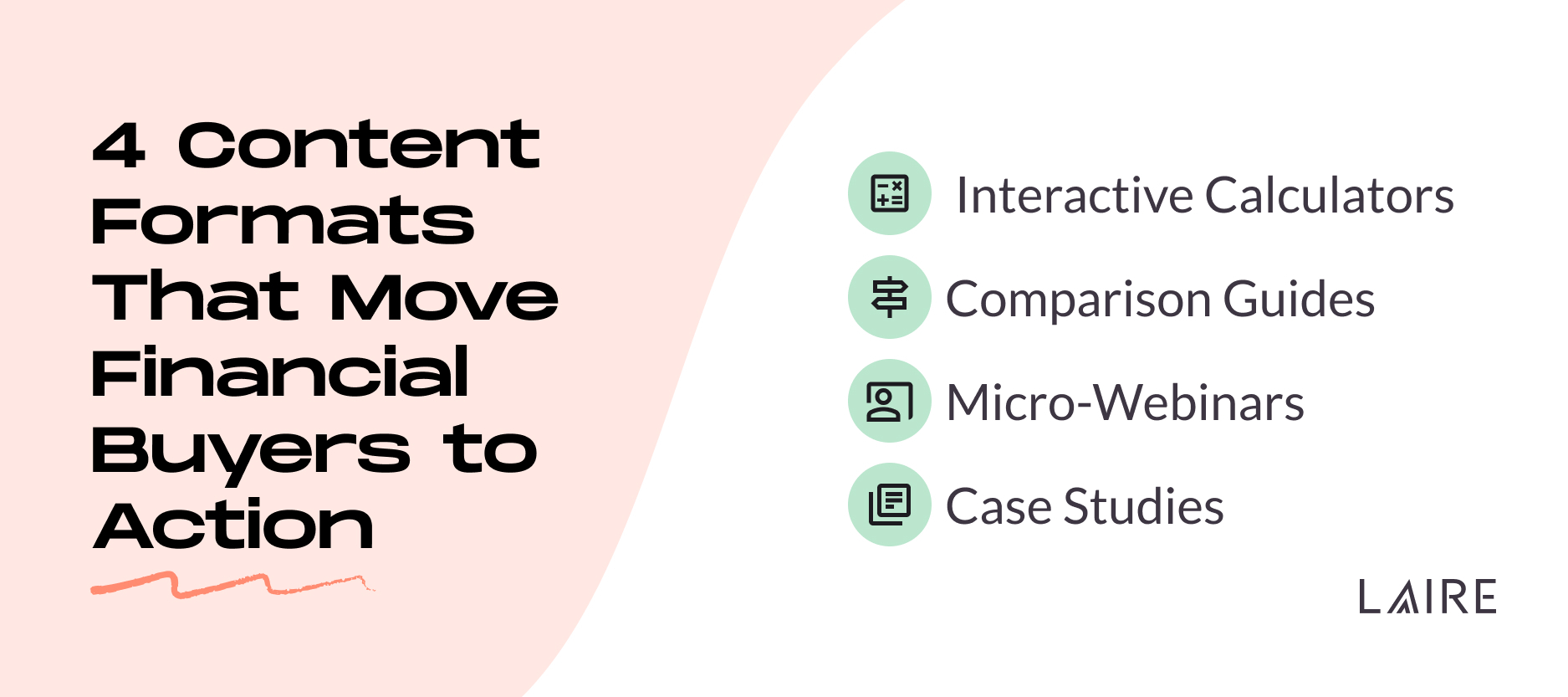
1. Interactive Calculators
Interactive calculators do the heavy lifting your prospects are already trying to do on their own. How much will this loan cost monthly? Should I prioritize a retirement account or an investment strategy?
These tools function as self-selection resources. They answer immediate, high-intent questions and, in the process, build trust and bring buyers further down the funnel without requiring a single sales conversation upfront.
2. Comparison Guides
Your audience is already comparing their options. The question is whether they’re doing it on your site or a competitor’s.
Comparison guides take the research burden off your reader and present it in a clear, advisor-led way. They don’t just explain what your products are. They clarify when each product makes sense for different financial situations. That kind of guided clarity is what moves someone from browsing to booking a consultation.
3. Micro-Webinars
Even as banking continues its digital transformation, people want real expertise delivered in a human way. Micro-webinars meet that need. A client can watch a 15-minute session on their commute home and walk away with a concrete investment framework or a clearer picture of their retirement options.
Short, focused, and on-demand, micro-webinars create urgency without pressure, which is exactly the right energy for high-stakes financial decisions.
4. Case Studies
If there’s one content format financial marketers consistently underinvest in, it’s the case study. And it’s one of the highest-converting content types available to you.
Here’s why: research from the Content Marketing Institute shows that 53% of B2B marketers say case studies and customer stories deliver some of their best content results. And the self-directed nature of modern B2B buying makes them even more critical.
According to 6sense, 81% of buyers have already chosen a preferred vendor before ever speaking with a sales rep, which means your content, including case studies, is doing most of the convincing long before anyone picks up the phone.
In financial services, where the stakes are high and trust is everything, that dynamic is even more pronounced.
A generic blog post can’t compete with a well-structured case study like “How We Navigated Volatility for a $50M Pension Fund.” One tells. The other proves.
What makes a financial case study work:
- Real data: Specific figures, risk mitigation outcomes, and ROI. Avoid vague language like “significant improvement.” Give readers the actual numbers.
- Relevant context: Frame the client’s situation in a way that mirrors the challenges your target audience is facing right now.
- A clear narrative: Problem → approach → result. Don’t bury the lead or hide your methodology. Showing how you think is part of what builds trust.
- Strong distribution: Publish it, share it via email, give it to your sales team for pitches, and consider repurposing it as a webinar or blog post down the road.
Case studies aren’t a 20-minute write-up. They require investment. But when done right, they’re among the most effective assets in your entire content marketing strategy.
Building a High-Performing Bank Content Strategy: 5 Pillars
Great financial content doesn’t happen by accident. It starts with proper segmentation and a clear strategy. You need to know which clients need which messages before you create a single piece of content.
Here are five content pillars that consistently drive results for financial institutions:
1. Growth Strategy Content
Speak directly to business owners and investors. Provide how-to guidance from banking professionals — not theoretical advice, but practical, actionable steps for people who are actively trying to expand. This type of content attracts qualified traffic because it’s both timely and credible.
2. Customer Storytelling
Real client success stories humanize your brand and create emotional connections. These aren’t testimonials, but narrative-driven accounts of how your institution helped a client achieve a specific business objective. They’re compelling reads, and they build the kind of trust that earns referrals.
3. Brand and Community
Content that showcases your institution’s role in the local community resonates far beyond your existing client base. It signals that you’re invested in the same outcomes your readers are, and that’s a powerful trust signal for community-minded buyers.
4. Executive and Leadership Voices
Give your leadership team a platform. Market insights, regional expertise, and forward-looking commentary from executives drive strong engagement. Readers spend measurably more time on this type of content. It positions your institution as a thought leader, not just a service provider.
5. Banking Insights and Education
Yes, education still has a place in your strategy — just not as the only strategy.
In-depth explainers on complex financial topics, industry trend analyses, and position clarifications still rank well and drive consistent traffic. The key is pairing them with clear next steps rather than leaving readers to figure out what to do with the information.
Every Piece of Content Needs a Clear Next Step
This is the piece most financial institutions get wrong. You can have exceptional content across all five pillars and still leave money on the table if you’re not telling readers what to do next.
Every article, guide, calculator, or case study should include a:
- Clear call-to-action — specific and outcome-focused
- Friction-free path — one click, not five
- Logical connection to what the reader just consumed
The difference between “Contact Us” and “Schedule a Portfolio Audit” is the difference between a vague gesture and a solved problem. One asks for effort. The other offers a result. Give readers the result.
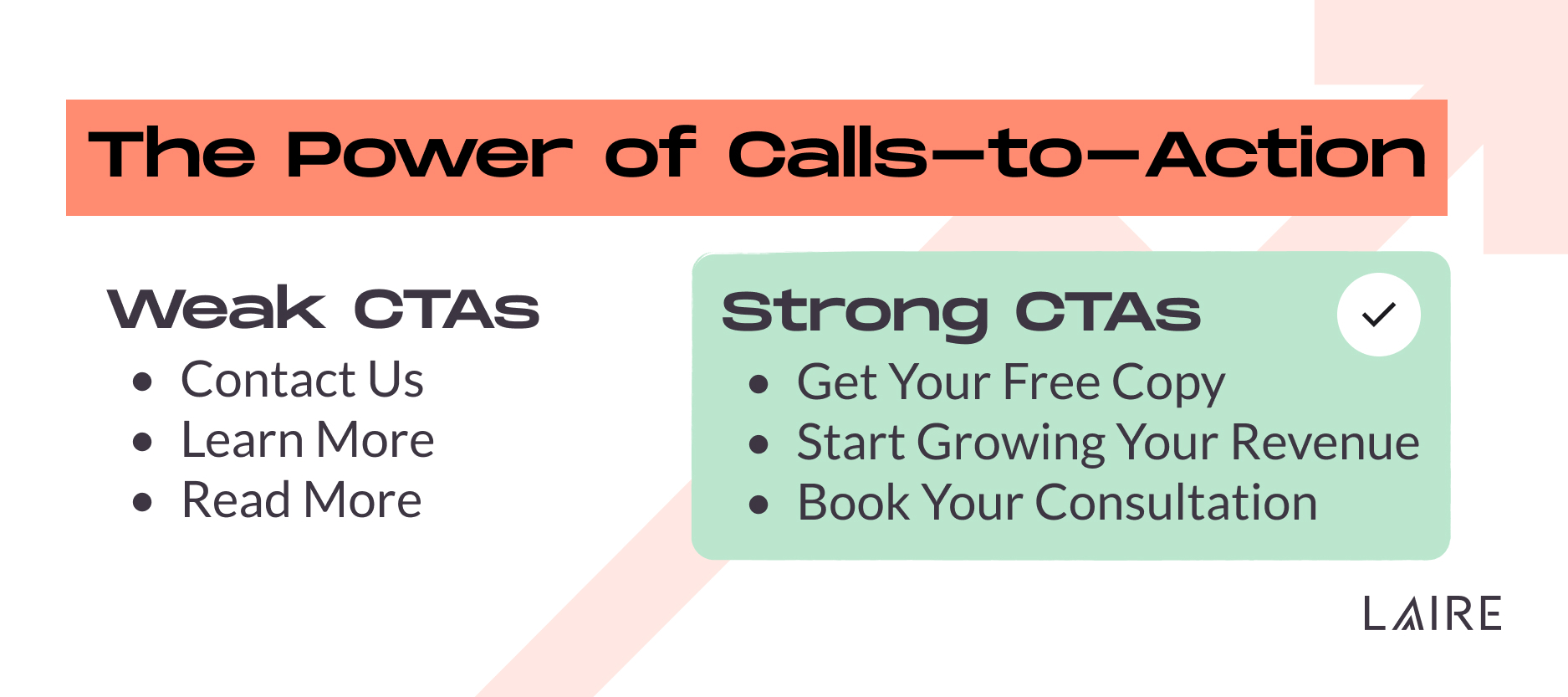
This is also where your content marketing strategy intersects with marketing automation. The right CTA triggers the right follow-up, keeps the conversation going, and moves buyers through your pipeline without requiring your team to manually chase every lead.
Stop Opening the Tap. Start Building the Pipeline.
Bank content marketing in 2026 isn’t about producing more content. It’s about producing the right content, the kind that helps buyers compare options, build confidence, and take action.
In a world of automated noise, the most effective content is also the most human. It demonstrates judgment. It shows expertise. And it earns the trust that turns a web visitor into a client.
If you’re not sure where your current content strategy stands, our AI-Powered Storytelling guide is a great place to start. Download your free copy and learn how to craft content that connects, combining the efficiency of AI with the human judgment your buyers actually trust.