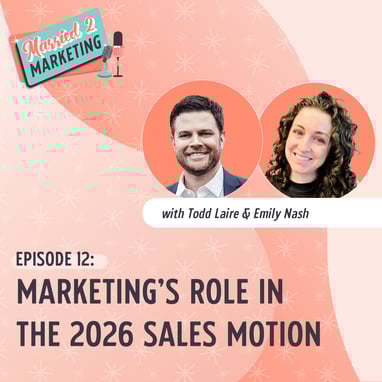
In this episode, our very own Marketing Strategist, Emily Nash, joins Co-Founder and CEO Todd Laire for a deep dive into the evolving relationship between marketing and sales and how their alignment is driving stronger revenue outcomes than ever.
From lead generation and CRM strategy to ROI and the rise of AI, they break down what’s changing, what’s working, and how teams can use AI to elevate the customer experience without losing the human touch.
Tune in for sharp insights, bold perspectives, and a look at how marketing and sales are joining forces to create a more powerful, unified revenue engine.
The Lifecycle Stages of a Lead Explained
Todd Laire (00:40)
Hey everyone, welcome to this episode of Married to Marketing. I'm Todd Laire, owner and co-founder of Laire Digital. We're a digital marketing agency. And I'm also joined by one of Laire's superstar marketing strategists, Emily Nash. And today we're going to discuss marketing's role in the sales motion as it relates to the future that we live in now, 2026.
and how marketing and sales are continuing the journey to form one team called Team Revenue. So welcome, Emily, excited to talk to you today.
Emily Nash (01:17)
Yeah, thanks. You'll be the sales side, I'll be the marketing side.
Todd Laire (01:21)
All right, good cop,bad cop. We'll figure out who's who by the end. Awesome. Well, I brought this forward to you, Emily, as you know, I think it's timely that we talk about the state of sales as it relates to especially companies, as companies are employing more and more sales team members, more and more sales management and sales leaders who also are cross department functioning in marketing. Some teams are aligned already, or at least they're aligned on paper, whether they actually are or remains to be seen, but aligned around revenue and that being one team that ideally works in one motion together, but easier said than done. But I wanted to spend some time today on this episode, just talking about what I'm seeing, really like in the field, air quotes.
But also, you what you're seeing, you work with a lot of dynamic companies that we have as clients. And of course you have, experience that you bring to the table as well about, that, that dialogue around marketing and sales alignment and trends that we're seeing, you know, now AI has entered the chat, right? With agents, marketing agents, sales agents, agents, everybody gets an agent, you get an agent, I get an agent. So, so let's dive in.
Emily Nash (02:36)
All right. Well, I that's an interesting topic. think also why it's important to talk about we're about the precipice of 2026. And so everything I'm seeing, I don't know if it's AI generated or individual generated is the trend looks like the last three years have been exploring different tools, whether you're marketing or sales. And in 2026, you've chosen your tool based on practice and experimentation. And now we're accelerating based on, I'm in this lane with Chat GPT and HubSpot with Data Hub, and I'm going about it this way. But I'm very curious your insights on the sales side. In addition to just like AI and the macro side of things, like what's happening in the economy or things slowing down, are there bigger sales teams making decisions? Is it just one individual? Like those kinds of things.
Todd Laire (03:25)
Yeah, so I'll start with the last one first, but I definitely want to touch on AI and what I'm seeing, how AI is being employed with that. But as far as like, you know, the sales motions, right, there's still, it's still relatively the same. However, each year that goes by, things are getting more and more complicated decisions are taking longer to be made. There's more involved, you know, aside from the usual players, like specifically like pricing review and contracts and you know, it relates to like software or like our services. There's just a longer due diligence period. I'm also seeing like marketing in particular, getting their budgets done and inked and pushing for approval earlier to get it secured. So obviously, go marketing, right? Well, they've learned, they've learned from, you know, the past and learned from, you know, their mistakes. And then they've also learned like,
Emily Nash (04:12)
Good marketing.
Todd Laire (04:21)
what it takes to get things done and approved. so, yeah, so due diligence is longer, more information. I think the other thing too is with AI, right? So search engines, obviously you're still prominent in a decision-making process as it relates to diving into content, but now we have AI and more ask engine interaction. And with that, AI is going... to the same Honeywell, if you will, or Honeypot, getting the information from search engines, but it's delivering it with an opinion, especially if the prompt is more so like, give me the pros and cons, compare and contrast, who's good at this? And so with that, you're kind of getting opinions baked in, whereas before it was just search engines just delivering a data dump, and it's up to you to find what resonates. Now we have ChatTPT and Gemini and...
You know, other players in the field delivering what looks like opinions. and, again, like if you can, you know, I'm getting into marketing and positioning your company, can't help but do it. But like, you're positioning your content to answer those questions and show up, then obviously you have an edge there. But again, back to the sales process, definitely seeing more of that. We're seeing attribution and how leads are coming to us. Uh, and they're specifically putting, or we're able to tag the attribution to AI.
as a source of where leads are coming from. you know, and I wanted to mention this too, and I think this is what kind of motivated me to want to do this episode was, you know, we had a sales presentation that you were a part of, Emily, and kudos to you, you know, publicly. You did a wonderful job pulling all that together. And I thought the, you know, chef's kiss to the great work that you did was, or, you know, icing on the cake was to show up in person.
Todd Laire (06:12)
you know, while you were, know, you're at home in Virginia beach and our other team members, you know, outside of, ⁓ you know, in Winston Salem area in North Carolina. And I'm obviously down in beautiful Charleston. this, this customer now, ⁓ you know, at the time, future customer, but heavily engaged prospect is in Atlanta. And I just felt like that was kind of the extra extra mile to go and traveled there, you know, for the day, touch and go to be in their presence with them. And boy, did that make a difference. And so I still believe in the tried and true methods, follow up being, know, what's that saying? I have to it all the time. The fortune's in the follow up, right? Right, coin it, tag it, I said it. No, I got it from somebody else. following up, you know, obviously we have tools now, AI that can do that. And it's acting as me, sending emails as me. They reply, it comes to me. But then you have an AI agent.
Emily Nash (06:55)
Yeah.
Todd Laire (07:09)
also recording that and documenting it and putting it into a timeline and a CRM so that that can come forward and some AI summarized notes. back to the in-person and the old tried and true, phone calls, ⁓ handwritten notes still apply. And I think maybe apply even more now because we're so digitized, right? And there's some great, obviously,
great advantages and leverage, being able to use technology, but then adding in the old school tried and true, going one step above, you know, really makes a difference. you know, back to my experience going and visiting that customer, you know, they were vetting us and two other agencies. And I asked them, I said, you know, did anybody else come in person? Cause I was really hoping like I made such a good decision to come here.
and be part of this conversation, because I doubt the other two showed up. And actually, one of them did. But us and that other agency that showed up had an advantage over the one that didn't. So ⁓ on and on, I could go about that.
Emily Nash (08:09)
Hmm.
Okay.
I think it was very intentional because we had put a lot of effort into that. think going on site seems to be like a tough one, right? Like, it worth the squeeze? Like no longer are we just sending them out to small accounts, sending out sales reps or marketing people to small accounts unless it's very strategic. So this case, it was very strategic and it made a difference.
Todd Laire (08:37)
Yeah, yeah, and just another one too. Another ⁓ large global manufacturer found us more or less, obviously by subject matter expertise, that we're a specific lead generation agency and we work with specific software and we do specific tactics and drive a specific strategy. But part of that was that we have somewhat of a regional presence in their area.
Was it, it wasn't required. never really came up until really after the fact that they decided to go with us that it was like, by the way, we'd love to have you into our North America plant, which is happens to be a few hours outside of where you're based, even though we're, you know, air quote based, we're, fully distributed and remote, but yeah, we can show up. ⁓ and, I, you know, I love that. I love kind of going, you know, they, they, you know, like go into the club and skip into the front of the line and they take the velvet, you know,
rope and let you in, like letting you into their operation and seeing how their organization runs like firsthand goes a long way. And by the way, back to being in person, we do a whole episode just on this, but I brought swag with me. brought lair swag with me. I think, it was just one thing after another. I showed up in person, but so did another agency. Did that other agency bring gifts? I came bearing gifts for you. Like they were so.
Emily Nash (09:46)
Yeah.
Todd Laire (09:57)
touched ⁓ by that and that made a difference and made an impact with them. And plus I love, yeah, yeah, yeah. Well, hey, if you have swag sitting on the shelf, it needs to be in the hands of your customers and evangelists. So yeah, it wasn't doing me any good sitting in a drawer.
Emily Nash (10:02)
Well, in that case, you brought gifts, so I really think we're gonna get it.
Well, I think that's good to hear because I was doing some research prior to this and it's all, okay, your buying committees are changing ages or Gen Z now. They don't want to see you in person. They want everything digital. And I was curious because I knew this was your stance, but also I experienced it like firsthand. Not us being digital is not the same thing. It's very two dimensional. Having you there, lively with a group of people who are alive together. That was really important.
Todd Laire (10:39)
Yeah, yeah. And on top of that, you the other side of it is everybody's distracted. Everybody's got phones and laptops and things, dinging and buzzing and, you know, pulling their attention away. And like this group was engaged from start to finish. You know, we were there, I was there an hour and a half with them and they, and there was five of them, you know, in a boardroom and they just were all engaged. ⁓ And so that, you know, that means something too, but, ⁓ but.
back to technology and leveraging tools. There's so much to say about accelerating sales velocity by using tools and technology. One thing I wanted to mention too, not to get on too much of a sidetrack or rabbit trail as I call it, is things like that track like buyer intent, like a Zoom Info or Sales Intel. Those are fantastic tools and some of them require like...
data department to scrape data and give it in a timely manner to salespeople to use and follow up with. But it's kind of you, they can be used, like we have clients that use them. I'm a big believer in buyer intent. Like it wouldn't be an industry if there weren't some truth to it. But I almost feel like too, it's like that old thing about buying stocks. When you hear your hairdresser or your barber,
talking about a stock you should buy, it's probably too late at that point. The get-in's already been got. Buyer intent can be kind of the same way. If you're not driving inbound motions, I think there's a balance to outbound and inbound. You're attracting an audience to you. Outbound is you're trying to pick up and gain an edge through signals or using ads or just straight up outreach.
I think there needs to be a balance there. But yeah.
Emily Nash (12:26)
I want come back
to buyer intent and signals. I those are two things we're talking about. So buyer intent definition in like Zoom info type of tool is that someone is checking you out like a buying committee maybe. Is that what we're talking about?
Todd Laire (12:40)
No, more so like it has Intel about specific people on the internet that are researching and going through kind of some buying signaling behaviors. They're looking at pricing pages on, let's just say software, right? They're looking at adding some type of software and they're looking at these different type of software companies, websites, and they're looking at pricing pages, but they have not raised their hand and said, yeah, give me a demo or talk to me or sell me.
they're just window shopping. so buyer intents kind of capitalizing on that window shopping and then taking the storefront, if you will, in this example, to them or taking the demo ask to them. so companies are investing a lot into technology and software and teams to help them manage that so that it can feed sales, kind of bringing it back to marketing and sales working together.
Emily Nash (13:36)
Yes.
Our topic today then, and I'm curious if this has been always been the case. I was in the impression you had buying signals and then sales got these lists. That's when they bought the software and they're going to go after them and then they weren't ready. So I'm curious if the opinion is shifting or it's more of a marketing signal to get in front of them. ⁓
Todd Laire (13:58)
I think,
I think it's a marketing signal. think again, yeah, I totally agree. So, you know, the data's there sales teams are jumping on it and just like, you know, ads, like, you know, you run an ad as a marketer to an ebook and then you get leads and then you just turn that lead over to sales and sales is like, Hey, can I give you a demo? Do you want to see our pricing? Do you want to try out our product or whatever? And I just wanted to, you know, a workbook to help me sort through a problem that I'm not really sure what my solution is going to be at that.
and I'm getting hit up with a sales motion.
Emily Nash (14:30)
Okay, all right, just making sure. So the definition, we're on the same page, marketing should be taking that information, acting on it with more middle of the funnel, bottom of the funnel type of content.
Todd Laire (14:41)
Yeah, depending on the campaign, absolutely. Yeah, and it's still helpful. I mean, we've seen it with our own clients where customers, like kind of looking at it in reverse. Okay, so we have these customers that have come in the last 30 days or the last 90 days. How did they get here? And I'm always looking to justify, right, with clients and prospects, like the efforts that we take working with our clients.
what tactics should be done and are used and at what stage. And so I'm always curious, like, anybody that closed as a customer, what did they do leading up to that point, starting with the very first impression, the first click that led to a close? What was the first click? And I'm looking for email subscriptions, subscribing to newsletters, ⁓ interacting with content and calculators and downloading resources like
eBooks and checklists and yeah, yeah, yeah, yeah. So, but I like putting an ROI on that, you so like, like we used in that example with that, that client we're talking about, we took another similar client that we've been working with for a while and we had a lot of data on, you know, revenue attribution and what they interacted with. And like, we were able to show that like $5 million in revenue came from ⁓
resource downloads, you know, like some people converted within a week, other people converted within a year, you know, from first click to close as a customer and signed contractor, you know, or paying in.
Emily Nash (16:12)
I would say that's important and what we're talking about bringing marketing to sales. So can bring it back to ROI, but it's not, it's rare, but not on as rare on the rare side. Like we're moving more towards that with HubSpot with buyer intent being out in HubSpot and then bringing it all home to before when they weren't in your database, when they were like in that buyer signal area. And then they came into your database and then attribution at the end.
Cause I know one more example is we have a new client, we're doing ads for them and they have, is it this? Yeah, this other one. They have five people in their pipeline representing $40,000 in their pipeline that came from our efforts so far. We can track all that now. We're using HubSpot to do this.
Todd Laire (16:56)
That's awesome. Yeah. Yeah. And, you know, and then like, I think too, establishing the handoff, right? Like at what point do we guard leads as marketing, you know, not ready for sales and we need to nurture them further and get more data from them, you know, have more interaction points, conversion points, as we say, so that we can get more information and then turn them over.
There's a difference, you know, this like between hot, ready, irons in the fire leads, raise their hands, hand raisers, you know, want to talk, want to engage, you know, are fast moving. You know, they come in first click and, know, within a week they've visited 30 pages and they've downloaded a couple resources. And then there's others that like are what we call rainy day leads and they're just kind of out there and they're, you know, they're probably not really sure like, you know, if they'll ever be a customer or we're not sure if they'll ever be a customer, but
but they still have value. And it's almost like we need to nurture them and help them, you know, help them grow in the pipeline that we happen to be working, whether it's our own or our clients. you know, at what point do we give visibility to sales on those? Are they visible to all of them? you know, I like collaboration at every level. You know, I love it when sales teams use marketing lingo.
like they're actually identifying leads by persona name that marketing worked hard to come up with. That's when, yeah, that's when I really start to see some marketing and sales alignment happening. That's when you really can call your two teams, one team, the revenue team.
Emily Nash (18:20)
I like that.
Yeah, I think that's a trend too. I've not seen it necessarily. think some of my clients in the SaaS area are more sales dominated and speak that way. so marketing has to kind of trail behind or speak that way. In this instance, all their MQLs are basically demo handraisers, which is in most terms an SQL or a sales qualified lead. But I'm curious if there will be a shift. I think we'd naturally do it at Laire. We're just naturally under a revenue
area, we speak sales and marketing, maybe that's just because we're in the market of doing that.
Todd Laire (19:06)
Well, yes, and I mean, you're to thank for a lot of that, but you're right. mean, we're doing what we want our clients to do working with us and eventually, ⁓ ideally doing on their own as they grow or they continue to bring us along in their journey too. But yeah, I mean, we're practicing what we're preaching the clients to do is have marketing and sales and operations in the same room talking about,
deal funnels and, and campaigns. so everybody's on the same page. You know, that's probably the sign of the most disconnected team is marketing's working hard, has campaigns and is bringing in leads and, then sales is following up and they have no idea where they came from or what, you know, what the messaging was or is that happened to bring these leads in. just jumped right to, you know, their, their side of the job, which is to sell. ⁓
Emily Nash (20:01)
Yeah,
think in organizations that are fast moving, like in one in particular I'm thinking of, they have product that's moving too. So there's all these features coming out. And so they have sales selling these features, but then marketing trying to catch up to get the message out and get the funnel going for these new things. So it's interesting to get them all working cohesively, even getting product into the revenue stream of things.
Todd Laire (20:23)
Yeah, yeah, yeah. you know, speaking of like...
roles as well. we're, you're probably seeing this too. Like there's less, I mean, maybe there's, there's still your tried and true, you know, business development reps, BDRs and sales development reps, SDRs. But then you have kind of like the middleman that like, would put you in this category, Emily, like you're not a sales person, but you are a sales engineer from a strategy side as it relates to the work that we do. So you
could easily be or there's a role for that in software sales engineering. Like, what do you need exactly? We need this and that and this and that. Okay, well, if hearing you correctly, then sounds like this might be a fit. This might work and you're wanting collaboration with this. Okay, let me put together a proposal or let me put together a bundle that addresses the majority of those things, knowing that we're really going to learn once you start using the product or hiring us for the service or,
or the latter, but kind of that intermediary, it's a consulting role, not so much a pitch count type role. Like let's get X amount of meetings booked and follow ups and all that. It's more so, what are you trying to accomplish and how can I help solve for that with what we have?
Emily Nash (21:40)
Yeah, I much prefer the consulting role. think that's too, people are doing their research. said 80 % in some of the research I was doing before this, up to 80 % of their own research and they favor not talking to a business rep. So when they do talk to someone, they want someone consultative who is guiding them in what they already know and helping them get that last bridge, bridging it to the hundred percent to their shore on their decision.
Todd Laire (21:51)
Yeah.
Yeah.
Yeah.
Yes. Yeah. And I can speak to that. We're looking at some software. Actually, we're looking at a few softwares for different reasons and different uses altogether. So different solutions require different products. And one has been very consultative from the beginning. And another has been very much sales org driven type tactics, but in a very polite, concise and intentional way.
I like, I'm, I'm in sales. love all the latest tactics and tips and tricks. And I've been, you know, quietly observing their sales motion and going, man, this is really good. And like the followups, the summaries after yeah, AI aiding in summaries, but like, don't just forward me the AI summary. Like you pull out, you know, clips and snippets and then add your own two cents to it and then make it short. So I can scan it like in one.
Emily Nash (22:40)
Who? Who can we take away?
Todd Laire (22:58)
you know, one blink really like, there's two things for me to do, or I said I would do and okay, I'll do them before the next meeting. And the meeting's booked at the end of the current meeting that we're at, right? And then there's an email summary follow-up to continue and what they're planning to do or what they agreed to do in between the next interaction point and what I agreed to do. So then that way there's a structure and a flow to it. And I'm seeing that more across the board.
But at the same time, also seeing what worked 10 years ago in email marketing and cold email sales is just completely littered on the internet with AI agents doing the same thing. And even worse, there's no way to get off these lists other than replying and saying, please remove me, which is also annoying. And not always done, right? Now they're like, why?
And that's why we ghost, right? Because we don't want to tell you why. We just want to tell you no. We actually don't even want to tell you no. We just want you to go away and take a hint after the seventh email we haven't replied to.
Emily Nash (23:55)
I think you don't do the seventh
email that's like, hey, I know you're not responding. I'm going to stop doing this now. you officially cut ways.
Todd Laire (24:00)
Yeah, no.
No, no.
Emily Nash (24:04)
So I'm curious on all this intentional experience you're having on the sales side, if it's still clunky for some, like I think we're knowing we want to do it. If we can, if there's still like automation needed and setting up the meeting right after, like, don't know if we're doing this out there because I'm on the marketing side, fingers crossed we are. Like the meeting gets sent in like a curated way or leveraging like a vidyard or a loom video, like all those things. Is there anything missing that people would need to know about?
Todd Laire (24:30)
Mm-hmm.
No, I mean, you know, aside from just having a straight up agent do it for you, right, like in telling them in a meeting, like, my assistant, Emily, robot Emily is going to send you the info you asked for. And then that's the agent following up. You know, I think, you know, I still like to, you know, if I've got
a good conversation going and there's buying signals that are popping up and it's just to get that feeling right. And then I say to them, they're like, okay, great. Well, send us that info and we'll review it. And then I say, great, do you mind go ahead and working with me on scheduling the next meeting? Because you know how it is, we get busy and it gets filled up. again, if there's buying signals and I've got somebody interested, usually they'll say, yeah, that's a good idea. Great, that's a great signal. Other times when they say,
We're not really sure right now. Let us get back to you." And they're saying that for the right reasons, not the classic, call us, we'll call you kind of retort. Yeah, and I'm kind of like, all right, well, we're busy. I've got others to follow up with. Sure, I'll let them go. But knowing if I don't hear from them and I'll usually tell them, like, hey, no problem, just to keep momentum on our side and to keep our schedules.
Emily Nash (25:34)
Another drive, yeah.
Todd Laire (25:52)
you know, a line, if I don't hear from you by Friday, do you mind if I follow up? You know, and most all the time they say no, of course not. Go ahead. And I think they appreciate that as well.
Emily Nash (25:55)
Thank
I think there's timeline or time boxing and some things I can do in writing, but in person I forget. Okay, hey, bye. See you. See you next time. That's just me because I'm in marketing. I'm used to them having a weekly call.
Todd Laire (26:09)
Yeah, yeah, yeah, yeah.
Yeah. Yeah. Well, I'm back to kind of that technology and AI pulling out what you said you would do in a meeting and then sending you a summary. And then there's your to-do list, you know, at the end of it and their to-do list. so pulling that content and sending them, you know, an email from you that you're handwriting, but pulling that into it goes a long way.
Emily Nash (26:35)
Yeah, I'm sure AMs or account managers, we're all doing that with our transcripts. We rely on that. I used to have an agency experience where we had someone just assigned taking notes. Can you imagine those days? That was not long ago.
Todd Laire (26:46)
Right.
What a job.
Emily Nash (26:48)
Yeah, that was the intern or the junior staff. All right. I'm going look at some questions to see, because I know I wanted to pick your brain on things. So the sales motion, I was curious how you're seeing that evolve. I don't know if we've talked about that. And I'm probably alluding to some external factors. I know we work with manufacturing clients. There's tariffs. I don't know if I go into all that, but just knowing that there could be sludge in the speed of the velocity.
Todd Laire (27:11)
Yeah.
Yeah. Now I think sales teams, more modern sales teams today, 2026 sales teams partnered with marketing.
are doing or they're focused on doing a better job qualifying before they start spending time aside. Put the hand raisers. want to demo. I want to know your pricing. I want to talk to you type leads aside and more so kind of the tire kicker type type leads like working harder to posture, I guess is our position and posture the company and showing the prospect that
this company is serious about working with the right fit leads and making it clear that not all leads are created equal. If you're looking for this, this isn't the place for it. Or if you're looking for that solution, we don't do that. I've gotten feedback in our process that we kind of stood out because our
pre-sales motions were so well defined. we've learned this from others that are successful at it we bring this to our clients, but sales teams time is precious. Everybody's time is precious. so better qualifying one is the right thing to do. But I think it sends a message to the right fit prospect that, this company or this solution or this...
this firm, whatever it is, organization type, is serious ⁓ about helping me get the answers I'm looking for and helping me evaluate in a timely and efficient way. I'm not afraid of telling a potential client that we don't do that. We've talked about request for proposal, the dreaded RFP process that we run into, and I know lots of companies do.
Emily Nash (28:45)
Mm-hmm.
Todd Laire (28:57)
⁓ We're not a big fan of them because we generate our own traffic, generate our own interest. We attract our own ideal customer audience to us. Yeah, right. Well, and hey, we've won a few thanks to you. And I looked at it like I like this company and I'm going to straight up tell them like we normally don't do this and it's the truth.
Emily Nash (29:06)
Not a crazy one for the right client for you.
Todd Laire (29:20)
⁓ Because you know, it's a great way for a company, right? That may or may not know any better to get free work done, you know, and that's the way I look at it because you know up until the point where we decided not to participate and do them like the work that we would do or you would do Emily would go into a black hole and we'd never hear from them like straight up like never hear from them or
we'd hear thanks and we move forward with another, thanks for your time, not giving us any feedback. We'd ask for it, not get it. And so I've had a few interactions and sales motions where I'm like, hey, I understand you're doing this, just so you know, like, we don't like doing this and here's why, but we'll make an exception. But here's what we ask in return, be transparent with us. Most of the time, companies are required to do that. I've been in motions where like a buying,
Emily Nash (29:48)
Yeah.
Mm-hmm.
Todd Laire (30:09)
agent or know point of contact was like we want to go with you we like you Send us an agreement, know what your invoicing look like blah blah blah, and I start doing that and then they come back and say, okay procurements involved and I need to get three quotes from other companies and I'm just like oh my gosh, you know, okay You know then I'll wait and then you know, they may still go with us most of the time. Yes, sometimes not
And that's frustrating. like, you we're seeing that more in the sales process too, is that just again, multi-department interaction. I think that could be deflating, you know, if you're a marketing exec, Emily, and you're given a budget that you control, but yet there's some handcuffs put on you, it's kind of deflating. then like, if you're already way down the road ⁓ with somebody that you picked out that you liked, and then have to kind of go back to them,
Emily Nash (30:47)
Thank you.
Todd Laire (31:05)
know, tail between your legs, like, sorry, but we have to do this, kind of makes you look bad, right? And, and so it's been some, you know, I've had that experience too. And I feel bad for the point of contact that I've been getting to know.
Emily Nash (31:17)
Yeah, ⁓ to
stand on with your new agency partner that you would go into into a relationship with.
Todd Laire (31:24)
Yeah.
Emily Nash (31:26)
All right, well, I still want to pick your brain. What else is there? We talked about that.
So what marketing behaviors or capabilities are you finding most valuable now or wish you had to help you close deals faster or better? For now, we're 526.
Todd Laire (31:40)
Hmm.
Hmm. Well, I think it goes to, you know.
high level, like solving for my needs specifically, or I'm solving for a customer's needs specifically, but like, you know, clear and transparent pricing, no friction to cancel a service, right? Like, love it when, you know, let's add going back to software, we could talk about, you know, just about every industry, but going back to software, like, I want to know, like, I'm excited about this purchase, and I'm ready to move forward. But I also want to know what it takes to get out of it.
you know, in case things go awry, like is there a cancellation button? Can I just click the button? You know, in addition to updating my payment method, can I also just cancel it too? And yeah, send me the terms. Maybe it's 30 days. Maybe it's, you know, I'm in a contract and it doesn't expire for nine.
Emily Nash (32:31)
It's all a secret. The cancel button
is hidden most times.
Todd Laire (32:34)
Or you have to
manually reach out to some nameless, faceless department and be put in a queue or whatever. You and I and so many consumers have had that experience. And if there's a competitor that's really clear and transparent about pricing and cancellation and upgrading, downgrading, that's huge. And I've been more forthcoming with that info in conversations that I've had.
because I don't want us to get one yard out from the end zone and then this come up where we hadn't discussed this is our cancellation process and then say, well, we're not going to agree to that because we always do it this way. That should happen first, second, maybe not first call, but second call if you've got some hot interest here and explain why it is you have those things in place.
Emily Nash (33:10)
number
Todd Laire (33:25)
You know, you're doing a lot of work on our site with adding five, six, seven frequently asked questions on different pages, service pages and subject matter pages that we're putting out there. That's what we want. That's what we expect as a consumer, you know, exploring a potential partnership or a purchase. ⁓
Emily Nash (33:46)
I may leave
the cancellation FAQ with your calls, not as an FAQ, but maybe if that's missing, you can get experience with it.
Todd Laire (33:51)
Yeah.
Yeah,
yeah, on pricing, right? Like, you know, am I signing up for a contract? What does that look like? You know, we brought that up recently where it's like, you know, we have ways for, we have different mechanisms in place to mitigate desire to, you know, make changes to an agreement that really should and is viewed as an annual one. But.
Emily Nash (33:57)
Yeah.
Todd Laire (34:18)
With that, we've all been in annual contracts. hated cell phones, I think pretty much ruined it for any type of contract-based service. There's got to be an easier way. And then obviously we're living in the world of Amazon where if I don't like what I got, I want what I bought either today or tomorrow. And if I don't like it, I want a refund and or a replacement or both the next day. And I want Stellar customer service to go along with that. That has revolutionized every...
Emily Nash (34:42)
Okay.
Todd Laire (34:47)
you know, every marketing and sales motion, you know, out there so that we need to try to respond in a similar fashion, you know, solving for the customer at every stage. you know, the other thing too, and I know you're seeing this is customer marketing and continued customer sales is a forgotten, you know, art form and a lot of organizations, you know, specifically customer marketing, like just because you brought them on as a customer doesn't
mean that you stop marketing to them. And if you're selling something that's a one-off, like they'll never buy it again, whatever that is, doesn't mean that they can't lead you to more customers. finding ways to turn them into evangelists, keeping your brand in their eyes through the various means of distribution is equally important.
Emily Nash (35:23)
Mm-hmm.
I want to go down a rabbit trail, but also pivot it back to an earlier conversation with AI, zero-click searches and being biased and pros and cons. And I'm curious if your customers is like a bank of opportunity for user-generating content. So they would leave a review on say a HubSpot partner page or a G2. And that type of thing is being scraped by the AI. So that thing is seen as more authoritative. And I wonder if there's like a strategy that needs to be put in place that were kind of...
Todd Laire (35:53)
Yes.
Emily Nash (36:02)
Sometimes lazy on because once you have them as a customer, you're servicing them on their contract and then you're not necessarily, you know, hitting them up for more sales or their friend network or whatever. But there could be opportunity there maybe.
Todd Laire (36:15)
There always is, you're absolutely right. Yeah, and actually I was thinking we should add that to our weekly meeting agenda to talk about like getting more proactive with that, but you're absolutely right. that's yet another, I mean, granted, if you have motions where you're collecting real customer data and using it as marketing messaging, testimonials, reviews, like.
Emily Nash (36:38)
Mm-hmm.
Todd Laire (36:39)
I don't care what you say about your product, your service, your company. I want to hear what your customers have to say about your product, your service, or your company, because that's what really matters. And I can often more relate to them than I can you or the brand or the product. So I totally agree.
Emily Nash (36:52)
Yeah. It's
more, is it called dark spaces or dark corners where you're like Reddit conversations? Is that, is that a bad term? I think that's a term I'm seeing like or forums like exit five you hear about that's all B2B marketers. And I don't know if that's being scraped by AI, but there's all like tons of more reputable type of opinions on SaaS software solutions or whatever.
Todd Laire (37:01)
Yeah, no, it's...
Yeah, I think we need to have a schedule of part two, don't you, Emily? Because there's just so many...
Emily Nash (37:18)
Yeah, maybe because I've
barely gone through this list. There's like so many more findings. We're not yet at 2026. So things are still shaping. ⁓ We can wrap with a couple takeaways from today and then leave the cliffhanger. Okay. What was your takeaway?
Todd Laire (37:27)
Okay.
Yeah, I love it. Yeah.
My takeaway is, I think anybody listening to this, this would be their takeaway is embrace the new, but don't throw out the old tried and true. I think my takeaway is I need to be better at using AI all the time. And have been interacting with different, we're in a partnership and had been interacting with different reps at our partner.
And they're like, hey, tell me about this. And I'm like, this is something I could just easily take their question and add some parameters and dump it into AI and get an answer like that and not spend any more time on it. But I'm slow to do that. And I think there's a curve there. And so maybe that's a tool that we should invent together and embed into salespeople's browsers. What was your takeaway?
Emily Nash (38:18)
Yeah. ⁓
going back to your experience, going through the sales process and it being intentionally automated. I think there's something there to make it more seamless that maybe we're missing or we can advise our clients on. so very, yeah, I wanted to hear your experience on that. don't do a lot of sales cycles as in my role with buying software for that matter.
I have to rely on my clients or you. And so I find that interesting. And so just curious how we're going to close the deal after marketing hand you the lead. What are those motions that are super seamless and customer centric and AI powered?
Todd Laire (38:59)
Yeah, yeah, there's a lot there. Yeah. Well, good.
Emily Nash (39:03)
Yeah, okay.
Well, the next episode is episode 13. So lucky number 13. Let's see, you want to skip that number? We can make it number 14.
Todd Laire (39:10)
why not? Maybe it'll be our lucky episode.
Emily Nash (39:13)
Okay, we'll fling it. We'll keep this the next few things from our earlier questions. Keep it going. This will be found on Spotify, YouTube and all your good podcasts areas.
Todd Laire (39:19)
You got it? Awesome.
Wherever you get them, you'll find us. Great. Thank you, Emily. All right. See y'all later.
Emily Nash (39:29)
All right, thanks, Todd. See you.

Meet Todd Laire, Co-Founder and CEO at LAIRE Digital, husband to Laura Laire, and loving dad to his two kids, Tristan and Skylah. With a passion for helping businesses succeed, Todd equips LAIRE clients with the ultimate toolkit for internal alignment, sales enablement, and skyrocketing revenue. His entrepreneurial journey began in 2001 with small business marketing and advertising. His real superpower was unleashed when he harnessed the internet's magic, using cutting-edge website and online marketing strategies. When he's not busy transforming companies, you'll find Todd running, lifting weights, conquering hiking trails, carving snowy slopes, or swinging clubs on the golf course.

Meet Laura Laire, Co-founder and VP of Creative Strategy at LAIRE Digital, wife to Todd Laire, and loving mom to her two kids, Skylah and Tristan. With an entrepreneurial spirit spanning two decades, Laura's passion for creativity, high performance, and continuous learning is contagious. From developing and launching products and company training materials to becoming a seasoned keynote speaker and trainer globally, Laura thrives on leading teams, seminars, and conventions with unmatched enthusiasm and passion. When she's not cooking up big ideas for LAIRE or providing creative direction and strategy for client brands at LAIRE, you can find her developing recipes, practicing yoga and meditation, biking, hiking, playing tennis and writing.
Are you passionate about marketing? Do you have unique insights, inspiring stories, or valuable expertise to share? We’d love to hear from you!
The Married 2 Marketing podcast is always on the lookout for enthusiastic and knowledgeable guests to bring fresh perspectives to our audience.
Fill out the form to request to be a guest on our podcast. We review every application carefully and will reach out if we think you’re a great fit.
