Creating new content is essential. But optimizing what you already have is marketing the smart way.
What Does ROPS Mean? Understanding Blog Optimization
ROPS stands for Review, Optimize, Publish, and Share.
Essentially, when you ROPS a blog or piece of content, you’re updating and improving it for better search engine rankings and user experience.
This approach is one of the most essential components of a successful marketing strategy, as it recycles your existing content and optimizes it to better align with the desires of your target audience. If done right, a ROPS can help your content rank higher and drive organic traffic to your website.
Optimizing a blog or piece of content using the ROPS method involves several key components. To ensure your content attracts and retains readers and ranks well on search engines like Google, here’s what it needs to have:
1. Content Relevance & Quality
You’ve probably heard this a thousand times, but it’s always worth repeating: Know. Your. Audience.
When you understand your target customer’s needs and pain points, you’re better able to communicate in a way that resonates with them and persuades them to engage with you.
2. Search Engine Optimization (SEO) Basics
This includes researching relevant keywords and incorporating them into your content, strategic internal and external linking, mobile-friendliness, and more.
3. User-Friendly Design
User-friendly website design is favored by search engines as it enhances the overall user experience, facilitating easier navigation, content discovery, and engagement. This boosts user satisfaction, increases time spent on your site, and ultimately improves retention and conversion rates.

Why ROPS a Blog?
Businesses that understand the importance of marketing strategy know that leveraging the ROPS technique can lead to significant results. Not only does it repurpose content that you already have, but it allows you to build upon the information you provide in a way that resonates best with your ideal customers.
A few reasons why a business should ROPS their content include:
- To stay relevant: The online world is dynamic, competitive, and always fluctuating. Trends change, and technology evolves. ROPS helps you stay relevant by updating your blog content to reflect the latest information and trends.
- To improve user engagement: Regularly reviewing and optimizing your content can enhance user engagement by providing a more enjoyable and valuable experience for your audience.
- To boost search engine rankings: Google and other search engines favor fresh, high-quality content. They want you to provide value — not just put out sales pitches. By consistently reviewing, optimizing, publishing, and sharing content, you can improve your blog's search engine rankings.
- Metadata & Freshness is a Top 3 Driver for AI Search: AI answer engines heavily favor recent posts. Studies show freshness and metadata timestamps are top-three citation drivers, directly boosting a source's likelihood to beat older articles in AI-generated summaries.
By adopting a ROPS approach, you help maintain the effectiveness of your content strategy and stay competitive in the online space.
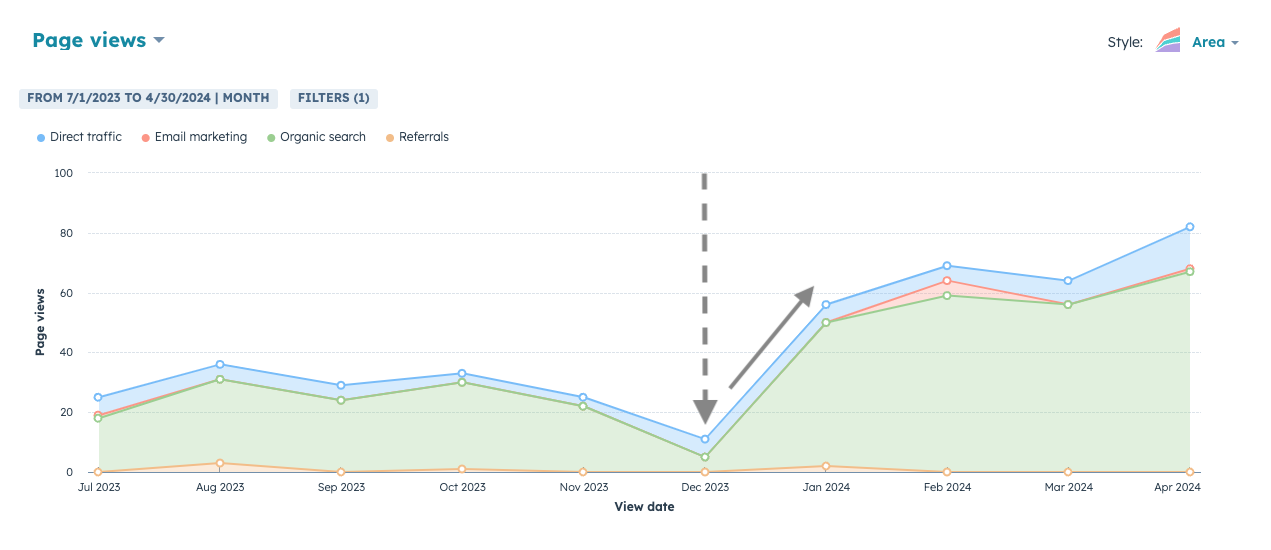
Still not convinced? Take a look at the performance of this LAIRE blog article and see the pageviews soar after implementing a full ROPS. (And we have MANY more examples like this!)
How to Create LinkedIn Ads: Designing a Killer Ad
Optimized content published on 1/9/2024
When should you ROPS a Blog?
Knowing when it's time to ROPS a blog involves monitoring various factors to determine whether your content is still effective and relevant. Here are key indicators that may suggest a piece of content is ready for a ROPS:
- Traffic Decline: If you notice a significant drop in organic traffic, it's time to review and optimize the blog. This could indicate issues with SEO or content relevance.
- High Bounce Rates: Elevated bounce rates may suggest that visitors aren't finding what they need. Reviewing and optimizing content can enhance user engagement.
- Outdated Information: If your blog contains outdated information or is no longer relevant to your audience, consider updating or repurposing your content to align with accurate information and your audience’s changing needs.
- Declining Search Rankings: If your blog posts are slipping in search engine rankings, it's time to reassess and optimize for current SEO best practices.
- Keyword Relevance: As you continuously research your keyword performance, update your content to reflect any changes or shifts in search behavior.
- Identifying Low-Performing Content: Regularly conduct audits to identify underperforming or outdated content. Prioritize these for ROPS to improve their impact.
- Shift in Business Goals: If your business goals or target audience have changed, your blog content needs to align with those changes. ROPS is a great way to identify what shifts you need to make in your content strategy.
- Competitor Analysis: Regularly analyze your competitors’ blogs to identify trends, new topics, or alternative approaches. Watch what they’re doing, but never copy.
By keeping a close eye on these factors, you can proactively determine when it's time to ROPS a blog and ensure that your content remains valuable, up-to-date, and aligned with your business goals and audience needs.

Creating Your ROPS List
If you’re just getting started with content marketing and don’t have a lot of blogs on your website, the above tips are useful in determining whether one of your existing pieces of content should be optimized.
However, if your website already has a library of blogs — especially if they’re over a year old — a better strategy could be to audit your content as a whole and create a prioritized list of blogs to ROPS. In other words, chances are that several blogs could benefit from optimization. Here’s how to determine which articles should take priority:
Performance Metrics
- Use tools like Google Analytics to identify blog posts that are receiving high traffic. These are likely popular and can benefit from periodic reviews and updates.
- Look at metrics like bounce rates, session times, and social shares to gauge how well your audience is engaging with specific blog posts.
Relevance and Current Trends
- Identify blogs that may be affected by changes in industry trends. Updating content to reflect the latest developments keeps your blog relevant and more engaging for your audience.
- Some content remains relevant over time, but it's essential to review and update evergreen posts periodically to ensure their accuracy.
SEO Considerations
- Evaluate the performance of target keywords. If certain blog posts are not ranking well for their intended keywords, they may need optimization.
- Identify blog posts that have slipped in search engine rankings. Optimizing these can help regain your visibility.
Content Quality Assessment
- Monitor comments and social media feedback, and address your audience’s concerns. Answering the questions they’re searching for online can improve the quality of your content and boost your search engine rankings.
- This may seem like a no-brainer, but you’d be surprised how often grammar gets overlooked. Check for any errors, formatting issues, and overall readability. Well-structured content is more likely to keep readers engaged.
Conversion Performance
- If your blog has specific goals — like lead generation or product sales — analyze the conversion performance of individual blog posts. Optimize those that specifically contribute to persuading readers to convert or, at the very least, engage with your content.
Content Calendar and Goals
- Review your content calendar and prioritize posting ROPS blogs based on your publishing schedule. Make sure to post consistently to provide more value for your audience — and to get on the good side of the algorithm!
- Take time to consider the overall goals of your blog. Blogs aligned with strategic goals, like building brand awareness or establishing thought leadership, need regular attention and updates.
Competitor Analysis
- Compare your blog content with that of your competitors. Identify topics or trends they are covering that you may have missed and incorporate these into your strategy. Again, never copy what your competitors do; just see what they’re doing and do it better.
Other Considerations
- Assess how your blogs have performed in the past. Identify any patterns and trends in terms of what types of content have performed well over time and build on those.
- If your industry is subject to regulatory changes, make sure that your blog content keeps up with them and remains compliant with current standards and regulations.
With these considerations, you can create a comprehensive strategy for determining how to prioritize which blogs to ROPS first. Regularly reviewing and optimizing your content based on these factors will bolster its ongoing success and relevance.
Want to learn more about how to ROPS your blogs? Download the rest here: